
Blog post
Is Hinkley Point the last of the generating dinosaurs?

Power generation, 13 July 2026
When it comes to generating power, big doesn’t necessarily mean beautiful anymore. Why power stations are getting smaller and more local, and what does this mean for both industrial users and the National Grid?
There is a light in my house that doesn’t have a switch. It stays on constantly unless we remove the bulb, and, despite living here for fifteen years, we have never found a way of turning it off. I don’t think it is even connected to the fuse board, but the last three owners have extended and remodelled the house so extensively that its wiring has become an opaque mystery.
In a similar vein, I don’t really understand how electricity works. Despite spending the second half of my career in renewables, I’m at best hazy on the difference between alternating and direct current, I don’t really know how inverters work, and the transmission system remains a mystery to me. In my head, it is some sort of giant loop that somehow links my orphan light bulb to a distant power station (but not apparently via a switch).
One thing I did learn while researching this blog is that electrons don’t actually move very much at all. It is more realistic to imagine a long line of an inconceivably large number of tiny little snooker balls stretching from your kettle all the way back to the power station. When the turbine spins, the energy moves through the system rather like one of those Newton’s cradle toys that used to adorn your boss’s desk in the 1990s. Each electron merely nudges its neighbour while the energy surges along the wire. The electrons themselves drift only very slowly, so you have probably had some of the same electrons in your house for decades.
The reason I have been thinking about all of this rather than the World Cup is that one of my current mandates involves distributed, “behind-the-meter” power. For those unfamiliar with the concept, this means factories and, increasingly, data centres are partially or wholly disconnecting themselves from the grid by locally generating their own electricity through solar panels, wind turbines, combined heat and power (CHP) units, and fuel cells. We are also seeing an emerging role for biomethane in supplying green gas to distributed CHP plants thereby taking out the electricity grid all together.
This represents a paradigm shift away from the traditional generator-transmitter-user model towards something less linear, where users and generators begin to merge with the transmission system becoming more of a backup than the sole provider.
It also means that power stations will start to get smaller, which goes against the grain of the existing consensus in industrial nations that big is beautiful. If somebody asks why a project needs to be large rather than small, you can sagely say “economies of scale”, and that quickly shuts down the debate. Similarly, the Russian dictator Stalin used to remove his pipe and menacingly declare that “quantity has a quality all of its own” when discussing the vast but unsophisticated Soviet army. This also tended to shut down the debate, albeit for different reasons, so if you like building big stuff, you’re in famous albeit rather dubious company.
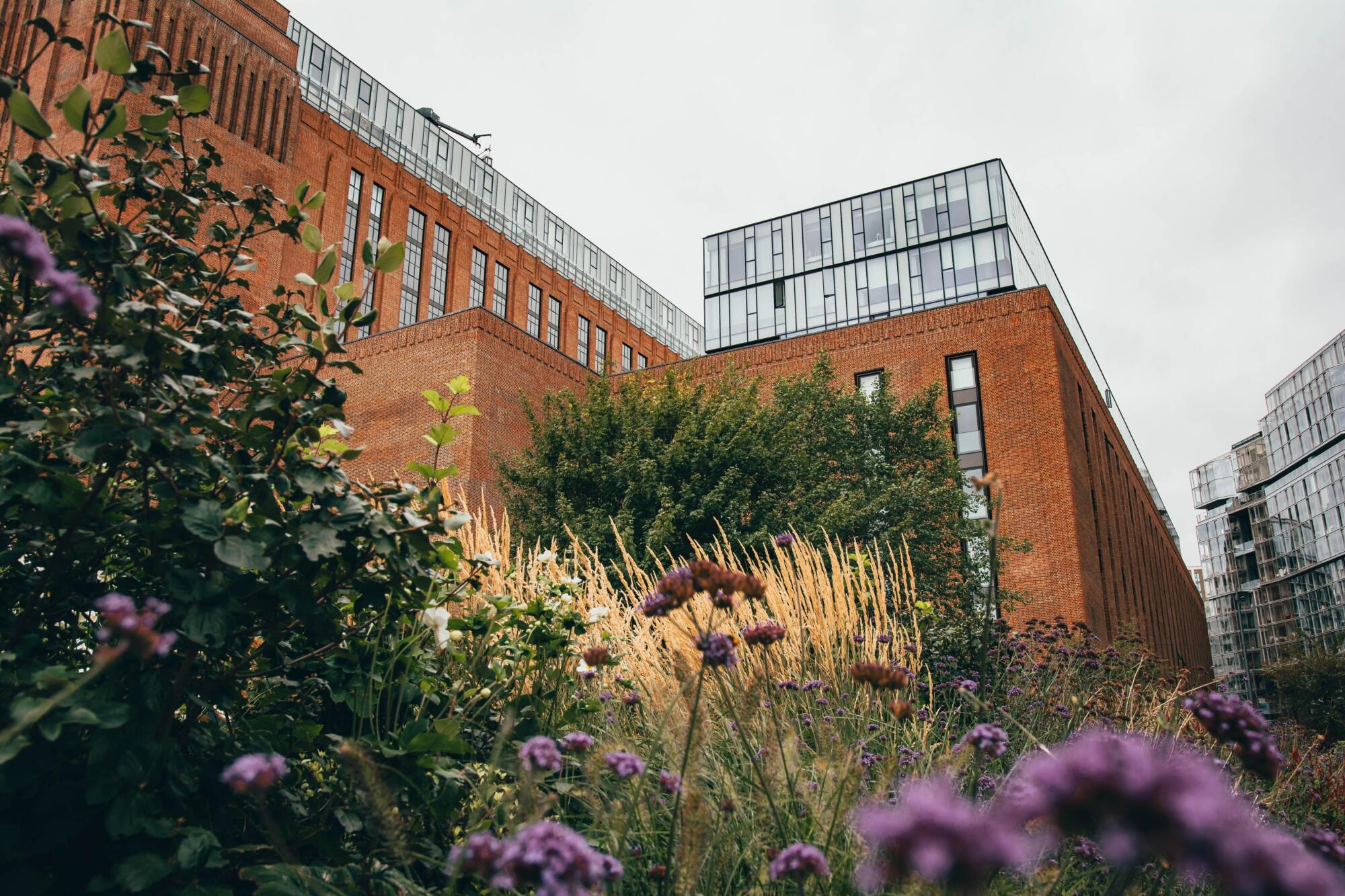
The National Grid is a classic example of this build big stuff philosophy. The post-war generation built about 100 enormous power stations and connected them with around 4,500 miles of high-voltage transmission lines and more than 500,000 miles of local distribution networks to deliver electricity from these distant monoliths to homes and factories. At the height of our obsession with gigantism, we built projects such as Drax, still the largest power station in the UK and once the largest in Western Europe. Before that, we built the iconic Battersea Power Station, famously constructed from around six million bricks.
To some extent, we remain beholden to this “big is beautiful” paradigm. Hinkley Point C, which will generate 3,260 MW of electricity, is currently being built behind thick concrete walls on a remote stretch of the Somerset coast, more than 100 miles from the UK’s main centres of population. That said, this distance and the depth of those walls may also tell us something about how safe the nuclear industry itself believes these ‘controlled’ chain reactions really are.
At the same time, however, falling costs for solar power, batteries and other distributed technologies are beginning to reverse a century of thinking. In electricity, as in many other industries, it may turn out that the optimal size of a generating unit is much smaller than we once believed, and increasingly we are seeing the growth of little local power stations.
The advantages for industrial consumers are threefold:
- First, having your own on-site pet power station avoids paying transmission and distribution charges, which can account for roughly half of a commercial electricity bill
- Second, it can improve your environmental performance because CHP plants generate both electricity and useful heat from the same fuel
- Third, you no longer have to worry about that pesky grid connection queue
This last point is becoming a major issue for data centres. A large hyperscale facility may require around 100 MW of power yet find itself waiting years for a connection. As I write, the UK’s grid connection queue contains more than 700 GW of proposed generation and storage capacity spread across more than 2,000 projects, with some applicants being offered connection dates well into the late 2030s. One of my American clients received a connection offer for his multi-million-pound UK data centre this week for September 2037. He got up nice and early and cheerfully rang UK Power Networks from New York because he genuinely assumed 2037 was a typo.
The impact of this shift is profound. Simply maintaining the existing transmission and distribution networks costs around GBP 10 billion per year, and this is ultimately recovered from electricity users. Furthermore, this vast web of cables creates its own metaphysical problem of maintaining system frequency and simply keeping the electricity system in balance costs around another GBP 2 billion a year. None of this second GBP 2 billion generates a single extra watt of electricity; it merely keeps the existing energy flowing within tight tolerances so that your lights stay on and your television doesn’t flicker.
As more and more large consumers shift to behind-the-meter generation, the economics of running and paying for the grid begin to change. Every factory or data centre that generates its own electricity reduces the burden on the transmission network and weakens the assumption that ever larger, ever more distant power stations are the most efficient way of supplying energy. It also reduces the pool of users paying for transmission and balancing services, so the grid could eventually slide into a downward spiral in which fewer users pay ever higher charges because everyone else is opting out.
I probably won’t ever really understand how electricity works or why that light won’t turn off. On a bigger scale, the electricity grid is unlikely to disappear, but it may increasingly evolve from being the sole source of power into a backup system that connects thousands of smaller generators rather than a handful of giant ones. This, in turn, will have profound implications for how the GBP 12 billion cost of maintaining and balancing that network is paid for in the future. The old paradigms about how to generate and transmit electricity are changing, and Hinkley Point will probably be the last big power station we ever build. It’s the generation equivalent of excitedly opening a new Blockbuster franchise. Tellingly, its predecessor as the biggest power station in the UK, Battersea Power Station, is now converted into luxury flats, niche little restaurants and shops because big isn’t beautiful anymore.