




One of my friends recently moved into a rather smart executive housing development in Epsom. After a few exhausting days of moving and unpacking…
WHAT WE THINK · INSIGHTS
One of my friends recently moved into a rather smart executive housing development in Epsom. After a few exhausting days of moving and unpacking…
US mega-funds seeking high profitability are boosting renewables in Europe

I really love cycling, but I’ll be the first to admit it’s a bit of a crazy sport. I probably drove my ex-girlfriend crazy…
Filter Publications
75 publications found
Grid congestion in the Netherlands has become a key constraint on energy projects, prompting regulators and grid operators to introduce new flexibility-based solutions.
Grid congestion in the Netherlands has become a key constraint on energy projects, prompting regulators and grid operators to introduce new flexibility-based solutions.
One such instrument is the Capacity Steering Contract (CSC), which allows assets to connect earlier or monetise underused capacity by offering flexible generation, consumption, or storage to the grid in return for compensation. CSCs can act as a binary enabler for projects facing long connection queues and can improve business cases for generators, battery storage, and large consumers, though their value is highly case-specific. While CSCs may unlock earlier revenues and operational flexibility, they also add contractual complexity and typically provide limited fixed income, meaning careful structuring is required to avoid adverse impacts on investment and financing outcomes.
Please refer to the full presentation for the complete picture.
Southern Africa is emerging as one of the most dynamic regions for renewable energy on the continent, with South Africa at the forefront as…
Southern Africa is emerging as one of the most dynamic regions for renewable energy on the continent, with South Africa at the forefront as the largest and most active market. The regional landscape is characterised by strong industrial demand for reliable and cost-effective energy. Renewable energy can provide both of those, along with contributing towards ambitious decarbonisation targets set in most sectors. A growing pipeline of private offtake projects, projects with some degree of merchant exposure, and ongoing public tenders for solar, wind, and standalone battery storage indicate strong fundamentals for continued growth in the short, medium, and long term. As we see in many markets worldwide, despite this momentum, persistent challenges such as grid congestion, regulatory bottlenecks, and environmental constraints continue to shape the pace and direction of development. Nevertheless, the cost-competitiveness and relatively short build-out times of renewable energy projects present a very attractive value proposition for offtakers and project developers/IPPs alike.
Expanding renewable opportunities across the region
South Africa remains the epicentre of activity. Public tenders for standalone battery projects signal a clear commitment to energy storage as a means of enhancing system stability. However, grid congestion in high-wind regions is limiting the connection of new wind projects, thus delaying development timelines.
Beyond public procurement, private offtake markets are gaining significant traction, especially among industrial and mining companies seeking to decarbonise operations while securing more reliable and cost-effective electricity. This trend is most advanced in South Africa but is rapidly expanding in Zambia, Botswana, and Namibia. The regional project pipeline is strong, with several initiatives already reaching financial close and entering construction, particularly in Zambia and South Africa.
High-impact technologies and evolving solutions
The technologies shaping Southern Africa’s renewable future are solar PV, onshore wind, and battery energy storage systems (BESS). Batteries are increasingly positioned as a cornerstone of the future market, both through competitive tenders and as critical instruments for grid management, including as a means to help unlock deeper penetration of renewable energy.
Another innovative trend is the emergence of energy trading. This can take the form of electricity trading entities—by aggregating demand from smaller or less creditworthy offtakers, intermediaries are helping to make projects more bankable, broaden participation in the energy transition, and reduce concentration risk. Alternatively, the South African Power Pool (SAPP) provides intra-day and day-ahead trading opportunities for projects—this is a valuable fallback in case the primary offtaker encounters any issues and is also increasingly looked at as the primary route to market for at least part of a project’s generated electricity.
Navigating operational, regulatory, and environmental challenges
Despite strong fundamentals and growth potential, local challenges remain significant. Grid constraints, particularly in South Africa, are a major obstacle. Transmission lines in resource-rich wind regions are already at or near capacity, slowing new connections and affecting the viability of future projects. In other countries in the region, there can be concerns around the reliability and availability of the grid and, therefore, the ability for projects to deliver generated electricity to end-users.
On the regulatory front, South Africa has made notable progress but continues to face difficulties as the slow unbundling of Eskom creates conflicts of interest and operational bottlenecks. Zambia is proactively moving, developing its open-access framework in collaboration with the private sector. This allows projects to progress even before regulatory reforms are fully finalised.
Environmental conditions also play a role. Zambia’s reliance on hydro has highlighted vulnerabilities during periods of drought, reinforcing the need for diversification into solar and wind as part of a more resilient generation mix.
The critical bottleneck: grid availability
The single biggest challenge to new project launches in Southern Africa is grid availability, reliability, and capacity, with South Africa’s wind sector being the most affected currently. The solution to this is simple in theory: massive build-out of grid infrastructure to improve resilience/reliability domestically; improve interconnection within the SAPP region and beyond; and extend the reach of electricity grids to improve electricity access (not least for more remote regions with large energy-consuming industries, such as mines). Of course, in practice, this is much more complex and nuanced. Aside from the technical/regulatory challenges, it would represent a huge financial investment and, since this is ultimately a public good, would require active and substantial participation from the public sector. Whilst it does not have to be funded upfront by governments or parastatal utilities, private sector financiers will require guarantees or similar assurances, which can be challenging in the context of many national utilities in the region going through challenging times financially. The private sector will have a role to play in this endeavour, and we already see several interconnectors between countries (including those looking to connect the SAPP to the East African Power Pool) being developed in the region. South Africa, for example, is gearing up to run a tender process for private sector investment into transmission line and transformer infrastructure, with the initial focus being to strengthen grid capacity between wind-resource-rich regions and the rest of the country. To facilitate this private sector investment, the South African government has been working with the IFC to set up an innovative guarantee structure.
Market dynamics and unique regional trends
The SAPP is enhancing regional flexibility by enabling cross-border electricity trading. This allows projects in one country to serve offtakers in another, broadening market access and reducing single-country risk exposure. Beyond widening the pool of possible bilateral offtakers for projects, it also provides intra-day and day-ahead trading markets. Volumes traded bilaterally have grown over the last three years, whilst competitive markets have shown resilient liquidity in recent years.
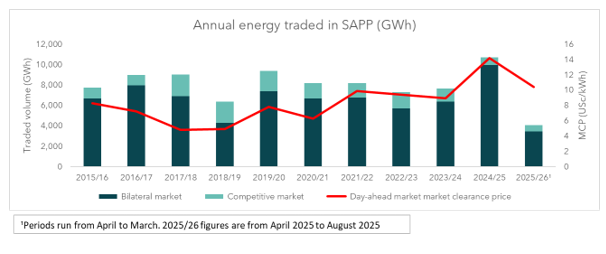
Market capture prices (MCP) have been fairly stable in the last ~4 years—the spike in 2024/2025 could be linked to residual effects of severe droughts in some of the participating countries (which caused electricity shortages), driving up prices.
The rise of private offtake and merchant projects is also a defining characteristic of the region, with energy traders playing a pivotal role in enabling smaller consumers to access renewable supply. In parallel, financial innovation is gaining ground, with insurance products and contract-for-difference (CFD) mechanisms increasingly available to mitigate merchant risk and improve project bankability.
Outlook: decarbonisation and the role of key technologies
Looking ahead, the outlook for Southern Africa’s renewable sector is strong. ESI Africa projects that across the African continent, electricity demand is set to grow by 5% between 2025 and 2027. Solar PV, wind, and battery storage will remain the essential technologies in meeting this growing demand and driving decarbonisation (and replacement of ageing assets) due to their scalability, cost-effectiveness, and rapid deployment potential.
While green hydrogen and bioenergy are attracting early attention, these markets remain nascent. Hydrogen, in particular, faces high costs and uncertain demand, with local offtake more likely to develop in the near term than large-scale export.
The establishment of formal electricity markets in South Africa and other countries will be another game-changer. Having competitive electricity markets should help advance electrification in the region in a cost-effective way and will unlock opportunities for merchant projects and innovative risk management strategies. Projects will be able to rely on this market as an alternative route to market (e.g., as a fallback in the private offtake sector) and, from an offtaker perspective, it can help unlock more flexible structures that have less of a take-or-pay character (or at least reduce potential deemed energy payments). Of course, the risk allocation of these kinds of offtake structures needs to be right for such projects to be considered bankable. That is not to say that the market will move entirely in that direction, but we would expect to see a more diverse set of projects in terms of offtake structure, as we see in many European and Asian markets today.
Looking ahead
Southern Africa’s renewable energy sector is dynamic, expanding, and increasingly shaped by private offtake demand, evolving policy frameworks, and cross-border market mechanisms. While grid availability and regulatory complexity remain the region’s main challenges, the outlook is positive. The emergence of energy trading markets and entities provides a promising and exciting new way for projects to sell generated electricity and, with the addition of BESS, the opportunity to maximise capture prices. The potential to capture higher prices and thereby optimise returns is obviously appealing to equity investors; however, the downside risk will still need to be addressed (especially as most projects in the region will require a substantial amount of debt financing to fund the construction). Experience from other markets across the world where these structures have existed for a long time can be useful but cannot always be replicated directly, and new solutions will be needed to address region-specific risks. The good news is that many such products are already available and many more are being developed that will allow for the continued growth of the energy sector in an ever-changing environment.
Recent events, including a significant power outage in Spain in April, have brought the stability of energy grids and the integration of renewable sources…
Recent events, including a significant power outage in Spain in April, have brought the stability of energy grids and the integration of renewable sources into sharp focus. The Spanish government’s report on the incident clarified that the blackout was not caused by a reliance on renewables, as initially speculated. Instead, it was attributed to a combination of factors. These included an “overvoltage” on the grid that triggered a chain reaction, insufficient voltage control capacity, and inability of the grid operator Red Eléctrica (Redeia) and certain conventional power plants to manage voltage levels and absorb overvoltage. Some disconnections of generators even occurred prematurely. The reality, highlighted by market trends in Spain, underscores a more nuanced challenge: addressing grid stability and storage needs.
Addressing grid stability and storage needs
Storage had already been gaining momentum and investor interest in the Spanish market, and the recent blackout further accelerated this trend. While hydro assets are very attractive, they are somewhat scarce, difficult, and slow to develop from scratch. This puts batteries at the centre of attention. Spain has ambitious targets to increase battery storage to 22 GW by 2030, further emphasising this opportunity. This focus on storage aligns perfectly with the need to enhance grid stability and manage the intermittency of renewables.
In this context, the government recently issued a Royal Decree. Even though it wasn’t ultimately validated in Congress, it at least helped alleviate the pressure of cliff dates for connecting renewable energy production plants. Projects gained the option to extend these deadlines during the month the decree was in force, and the new connection dates established are valid even without Congress validation. As the regulatory framework for energy storage is implemented in the Spanish market, we at Green Giraffe Advisory are actively supporting investments in both stand-alone and hybrid battery storage projects. We strongly believe that battery storage penetration is fundamental for market and system stability. Green Giraffe Advisory leverages its extensive experience and credentials in implementing these systems across Europe and other reference markets. Our team of experts is fully available to generate value for our clients in the Spanish market.
Optimising existing connections through hybridisation
A further important factor in the Spanish market is the penetration of solar energy. This has led to significant hourly price volatility and a steep deterioration of market price capture rates for PV. As a result, hybridisation is being discussed on all fronts to address these price fluctuations. Everyone is looking to optimise their existing grid connections by combining technologies. The goal is to produce an attractive baseload profile that can help unlock more attractive PPA prices, better sources of funding, and more attractive returns. Recognising this trend, Green Giraffe Advisory actively facilitates and advises on hybrid projects, blending technologies such as solar PV with storage or onshore wind to help clients maximise their asset efficiency and revenue potential. Green Giraffe Advisory’s market–competitive solutions are proven, as demonstrated by experiences like the Oya Energy BESS hybridised project in South Africa. This 128 MW co-located hybrid plant (wind, solar PV and lithium-ion batteries) has shown its ability to generate value as it outperforms fossil fuel projects on price while generating a stable base load production profile.
Capitalising on shifting market dynamics and financing trends
A further consequence of the increased solar PV cannibalisation is the substantially broadened differential between solar and wind prices. This makes wind extremely attractive, but scarce. This trend has also led to a substantial gap in PPA prices offered by the market for PV versus wind, due to PV’s less attractive production profile and excess energy supply during daylight hours. Spain is also starting to see zero and negative prices appear, causing some players to suffer as certain PPAs do not properly address this in their settlement formulas. Despite these new dynamics and complexities, Spain remains a good market to gain exposure to merchant and corporate PPAs. This is due to its market depth, the number of sizeable projects, and the overall fact that Spain still has very limited negative prices compared to other European countries, both in terms of frequency and order of magnitude of the prices.
What does all this mean for the financing front? We see that optimising existing structures and recycling capital are prominent trends. One major topic in debt is merchant financing for PV assets, with many players pursuing this while waiting for a PPA price recovery or hybridisation of their portfolios. The aim is to offer a more attractive base-load production profile to off-takers. While financing options exist, funders are prioritising portfolios with a mix of technologies. Subordinated debt is another way to optimise the capital stack given constrained capacity to raise high levels of senior debt for PV. A third option is exploring alternative lenders, who also offer interesting and attractive financing structures. For old assets with structures that are not optimised, significant uplift can be achieved via refinancings. Finally, HoldCo debt for platforms is a very active area in Spain as well. While the landscape is complex, Green Giraffe Advisory actively supports clients in navigating these financing challenges, structuring deals that appeal to funders and align with market realities.
Strategic M&A and new growth sectors
On the M&A side, we see the market being flooded with PV sell-side projects, and M&A activity declining due to lower valuations. Nonetheless, the number of active players in Spain continues to expand. The second half of the year will also offer interesting wind opportunities as investors keen to rotate some of their mature portfolios in Spain and Portugal bring them to the market. Some of these opportunities offer an added expected value associated with hybridisation and repowering potential.
Beyond traditional renewables and battery storage, data centres are a hot topic in Spain. Developers are looking to deploy capital into data centres as traditional sectors lose attractiveness. The focus is on real estate packing, then selling it all together to a technical expert in the data centre business. This new area of interest for renewable energy developers seeking to use their development expertise presents a significant opportunity. With our expertise in energy infrastructure, Green Giraffe Advisory is well-positioned to help facilitate connections and investments in this burgeoning sector.
Furthermore, biogas from agricultural waste is gaining momentum, with many PV developers now looking to re-employ capital in the energy transition through this avenue. Spain has significant potential in this sector given its sizeable agricultural sector and only very few operating facilities compared to other European countries. We see biomethane opportunities increasing with funding requirements at the asset and platform levels. Green Giraffe Advisory offers a unique set of credentials and expertise in this field, including fully dedicated experts with extensive experience. We can guide clients on capital requirements, at the equity and debt levels, at both asset and platform levels, and provide strategic advisory in this sector based on replicable experiences in Europe.
In conclusion, Spain’s energy market, while undergoing significant transformations, presents a wealth of opportunities for those who understand its intricacies. Green Giraffe Advisory can assist investors and developers in navigating these shifts, particularly in areas such as battery storage, hybridisation, strategic financing, and emerging sectors like data centres and biogas.
Ørsted’s FlagshipONE e-methanol project was initially hailed as a groundbreaking development in the race to decarbonise hard-to-abate sectors, such as shipping and aviation. The…
Ørsted’s FlagshipONE e-methanol project was initially hailed as a groundbreaking development in the race to decarbonise hard-to-abate sectors, such as shipping and aviation. The project aimed to produce 55,000 tons of e-methanol annually, using renewable electricity and captured CO2. Outside of refinery projects, it seemed one of the few projects moving ahead despite continued delays in the rest of the market.
Final Investment Decision (FID) was taken in December 2022, and the project met many of the key criteria we look for when assessing e-fuel projects:
Despite all this, the project will not move forward, and the recent announcement of FlagshipONE’s cancellation is drawing attention from the global e-fuels community. We expect the cancellation will increase scrutiny of commercial e-fuel projects’ business cases, which is not a bad thing. However, it does raise fundamental questions for the industry. As each sponsor and project is different, we thought it worth taking a look at the context of FlagshipONE.
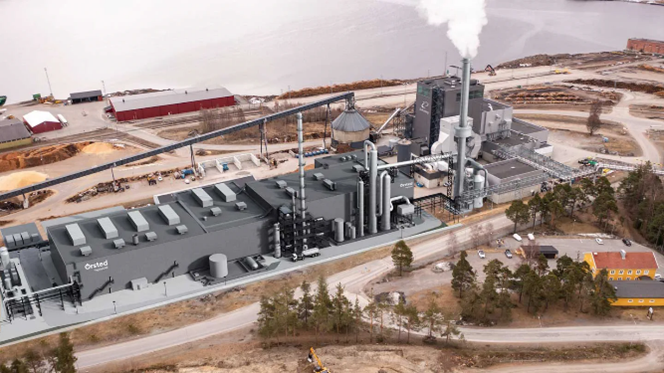
Figure: FlagshipONE visualisation
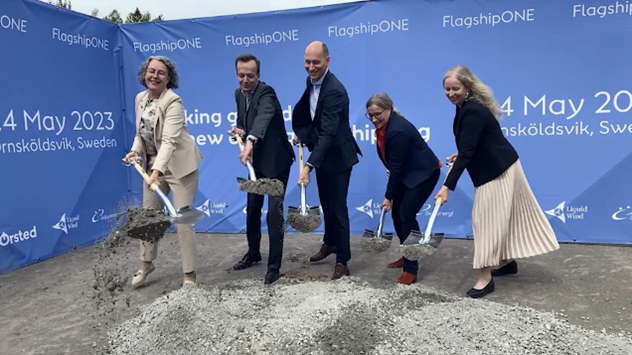
Figure: May 2023, promising times when shovels first broke ground
Ørsted: Strategic re-orientation towards the core
The last twelve months have generally been a bumpy ride for Ørsted. With its market capitalisation currently at or around a third of its peak, the company is refocusing its strategy, aimed at avoiding the need to raise fresh capital. In a challenging macro environment (higher interest rates, higher costs), alongside some operational challenges, the company also announced EUR 4 bn impairments on its US offshore portfolio last year. As a result, the company is now being appropriately judicious in how it employs capital across its business areas and project portfolio – particularly important given the capex needs it is projecting. Having suffered a downgrade to BBB by S&P in February 2024, it’s natural for Ørsted to continue to focus on discipline. Thus, Ørsted is reducing exposure in areas where its management does not think further capital employment will yield an acceptable risk-adjusted return in the near term.
Before the H1 earnings call on 15 August 2024, most observers thought Ørsted had finished cleaning out its closet last fall, with the cancellation of Ocean Winds 1 and 2. However, besides further US impairments, Ørsted had a surprise in store with the cancellation of its FlagshipONE project in Sweden, and its announcement it would not pursue further e-fuel projects but would remain active in hydrogen projects. With the full context, we expect two key rationales for Ørsted’s decision. Firstly, a re-orientation towards core sectors like offshore wind enables Ørsted to put its focus where it has proven its excellence and market-leading capabilities for years. Secondly, Ørsted is highlighting a fundamental issue with offtake for e-fuel projects, pointing to the difficulty of building business cases for such projects in a capital-constrained environment.
The chicken-and-egg problem: Misalignment between e-fuels producers and offtakers
One key explanation from Ørsted’s announcement is that “the industrialisation and commercial development of the offtake market of liquid e-fuels has progressed significantly slower than expected.” Today, two of the most attractive near-term pathways for e-methanol use are in e-SAF or as shipping fuel. Ørsted’s decision implies that whatever terms they felt able to negotiate with these offtakers were insufficient to make an attractive business case. Besides the price, the duration of offtake contracts has been highlighted by Ørsted as a significant point of discussion with offtakers. Renewable energy developers are used to 10-15 year or longer electricity contracts, while many fuel-consuming companies usually sign shorter-term contracts of 1-3 years, which poses a significant gap to be closed in contract negotiations.
The potential is out there – from public announcements, there are clearly ready offtakers for e-methanol, if offered the right terms. For example, BNEF reported that 225 dual-fuel methanol ships are on order as of March 2024. Moreover, the current SAF production capacity in the EU is around 0.24 million tonnes, which is only 10% of the SAF required by 2030. The amount of methanol needed by offtakers to comply with the RED II act and REFuel EU is massive compared to the almost non-existent e-methanol production capacity currently operating or under construction. As the hydrogen and e-fuels industry has been noting for years, there is a chicken-and-egg problem in getting offtakers and producers to move ahead simultaneously and sign offtake contracts at price levels that make good business cases for both parties. In this context, if you have a constraint on capital and need to direct that towards more certain business cases in the shorter term, the “Ørsted dilemma” is clear.
Explanations for e-fuel offtake not ‘taking off’
In theory, low supply and high demand will result in high prices. However, a mix of explanations may illustrate why the theoretical demand for e-methanol does not yet seem to be materialising:
Good or bad news for hydrogen developers?
The cancellation of the FlagshipONE e-methanol project is a stark reminder of the complexities involved in getting market participants to move simultaneously, though we should point out that we do not have full insight into the development process, and decisions taken by FlagshipONE versus by other projects. Ørsted’s move away from e-fuels appears to be significantly driven by their strategic re-alignment, rather than just by challenges in the e-fuel market. The company has made clear that it thinks e-fuels will mature, though potentially needs further regulatory evolution, and that it is continuing its focus on green hydrogen.
With this in mind, Ørsted’s exit might even be positive news for other e-fuel developers, as it might cause policy-makers to question whether the carrots and sticks implemented are adequate to lead to the desired pace and scale of e-fuel adoption, which is needed to comply with politically set targets. Particularly, one could question what might happen to the e-fuel industry if some of the ongoing annual USD 5-7 trillion subsidies to fossil fuels were re-directed towards e-fuels (or at least not given to fossil fuels).
On another positive note, mainland EU green hydrogen developers may benefit from the current difficulties in the e-fuels market, as it reduces their perceived risk of competition from imported green hydrogen-derived products. The cancellation of projects such as Ørsted’s may begin to raise more questions on e-fuels availability, signalling that offtakers may have to compromise on price and contract duration to secure supply. This is particularly notable since, not long ago, discussions in the market were that the EU would be overwhelmed with imports of cheap e-fuel products from areas with cheap renewables, undermining mainland EU countries’ attempts to develop their own green hydrogen industries. As that narrative recedes, hydrogen production in mainland EU looks increasingly critical, and public investment across the value chain in transport, storage and heavy industrial use looks far-sighted. Notably, Germany, the Netherlands, France, and Iberia are driving slow but steady progress towards cultivating a first generation of successful commercial projects. These projects may not meet excessive expectations set years ago, for the EU to produce 10 million tonnes of green hydrogen per year by 2030, but they can secure the foothold this industry needs to mature and scale.
It is hard to believe that it’s been more than a decade since the world turned its eyes to South Africa as the host…
It is hard to believe that it’s been more than a decade since the world turned its eyes to South Africa as the host of the 2010 FIFA Men’s World Cup, a momentous event that showcased the nation’s vivacity and potential on the global stage. Around the same time, South Africa’s electricity sector stood at a crossroads, fighting with a number of challenges ranging from aging infrastructure to an insatiable demand for power.
Although football and renewable energy have, at first glance, not a lot in common, this particular point in time is interesting. In 2010, the country’s energy landscape was in the early stages of transformation from a heavily polluting electricity sector, with the seeds of a renewable energy revolution just beginning to take root. Initiatives such as the Renewable Energy Independent Power Producer Procurement Programme (REIPPPP) were about to be launched, signaling a shift towards a more diversified and sustainable energy mix. While being a ‘green’ World Cup was perhaps not the overriding criterion in 2010, South Africa ran a successful tournament back then; it could reasonably be questioned whether it could do the same today given the ongoing effects of load shedding.
Since 2010, South Africa’s electricity sector has begun a journey of very significant changes, characterised by efforts to diversify its energy mix, promote sustainability, and improve access to affordable and reliable electricity. Although coal is still by far the main source of electricity generated in the country, it has been steadily diminishing, starting to give way to a more balanced and environmentally conscious mix that includes renewable energy sources and not least because of the first REIPPPP rounds.
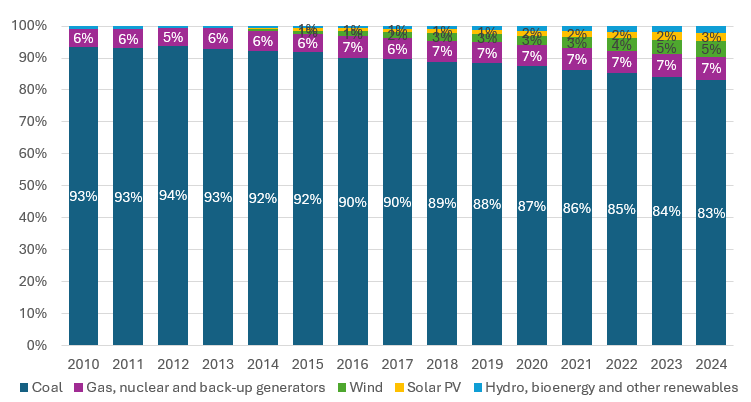
Figure 1: South African electricity mix (source International Energy Agency)
Central to the continuation of this change will be the further liberalisation of the electricity market, a process aimed at fostering competition, innovation, and efficiency, not to mention relieving some of the operational and financial burden on Eskom, the state-owned utility. Eskom is today (and has been historically) vertically integrated but is undergoing a process to split it into generation and trading entities which will also enable this liberalisation. Further regulatory reforms, private stakeholders’ engagement and technological advancements will then act as additional catalysts.
How the ongoing liberalisation of the electricity market in South Africa has reshaped the dynamics of the production and sale of renewable energy: a transition from public tender to private procurement
It’s worth looking at the history of the electricity market in the South African context to understand the scale of the changes we are talking about. Until recently, the South African electricity supply industry operated under a single buyer model, where Eskom was acting as sole offtaker for all the electricity produced in the country (and as the sole producer for electricity on the grid, too).
The first phase of changes saw the introduction of Independent Power Producers (IPPs) to the South African electricity market as an initiative from the government to diversify the energy mix and attract private investment. On the renewable energy side, IPPs were initially required to participate in competitive public tenders to secure Power Purchase Agreements (PPAs) with Eskom for their projects. The REIPPPP bid windows (BW) 1 to 5 organised between 2011 and 2021 marked considerable success stories, facilitating the development of several gigawatts of renewable energy capacity across the country, proving the case for a world beyond reliance on fossil fuels and stimulating investment in the sector. BW6 in 2022, exclusively awarded solar projects and underscored the importance of geographical symmetry between projects and grid capacity available. In the gas sector, the introduction of IPPs further bolstered South Africa’s energy resilience and contributed to the transition towards cleaner energy sources (compared to coal electricity generation). The result of this can be seen in figure 1, with an energy landscape becoming gradually more diversified and renewable energy sources now contributing more than Eskom’s nuclear generation.
In addition to bringing much needed generating capacity onto the grid (that it is clean is a clear benefit, but the capacity is needed, full stop), REIPPPP has offered a pathway to project financing utility-scale renewable energy projects, through its robust framework, reliable offtake agreements, and strong guarantees. The importance of now having a funding community that understands renewable energy projects is a further achievement. Although REIPPPP (for which BW7 is ongoing) as a framework relies heavily on public sector involvement and support, when compared to the ‘old’ way of procuring electricity generation (i.e. Eskom builds), it has been remarkably efficient and disciplined as well. Take Eskom’s ‘new’ coal-fired plants Medupi and Kusile: both have faced extensive delays and cost overruns over more than 15 years – during the same time multiple GW of renewable energy generation has been added to the grid in a cost-effective manner.
As South Africa continues the first part of its marathon journey towards a more diversified and competitive landscape (admittedly with a few water breaks along the road), the argument for maintaining the previous model solely focused on REIPPPP tenders has grown weaker. Although there are some differing and at times competing political objectives, what we have witnessed in recent years is recognition at large on the part of each of the government and Eskom of the reality that further changes and progress need to be facilitated.
The impact of Eskom’s financial situation on the state’s balance sheet adds weight to the imperative to look for alternative options for renewable energy procurement. Indeed, without this important additional factor, one could have argued that continuing on with REIPPPP rounds at speed would be enough in the short term. However, REIPPPP is not neutral for the government balance sheet and coupled with an increasing demand for security of supply from the private sector (a more prevalent first driver for corporate power procurement in South Africa than the green objectives we might see in other markets, although these are important too in South Africa), facilitating purely private solutions alongside successful public-private partnerships recently became an important objective.
Consequently, the government and Eskom have undertaken some courageous steps to restructure and clarify the processes for electricity generators and offtakers, thus engaging a smoother transition to a liberalised electricity market. Key milestones in this journey include:
These developments have opened avenues for increased private generation and facilitated wheeling (use of the national grid by private power producers, where the end buyer is not Eskom but another private party), enabling large-scale PPA activities and the transportation of privately generated power across the national grid. Wheeling has therefore emerged as a scalable solution to accelerate further adoption of renewable energy together with the liberalisation of the electricity market.
Nuances and complexities of the new energy traders and private offtake projects. What are the challenges and opportunities for the different stakeholders involved in renewable energy projects today?
South Africa is now embarking on an ambitious programme aimed at evolving the electricity market to a stage where electricity can be freely bought and sold in different ways: (i) with regulated PPAs between the renewable energy project and the transmission service operator NTCSA, (ii) with private PPAs between licensed generators and final offtakers, and (iii) via trading platforms, enabling market participants to engage in hourly and daily trades.
In the long-term vision of a fully liberalised electricity market hence emerges a promising landscape of flexibility and security for all stakeholders. Such a market structure inherently provides additional comfort by simplifying the process of sourcing new offtake agreements should a private PPA be terminated. This flexibility not only enhances the resilience of the electricity supply chain but also opens the door for innovative market entrants to challenge the status quo. The potential for fully liberalised trading platforms is huge as these platforms can enable real-time, dynamic trading activities, making the market more competitive and efficient. As South Africa progresses towards a largely decentralised market, the role of energy traders will become increasingly important. They serve as the crucial link between electricity generators and consumers, ensuring an efficient and dynamic energy trading ecosystem. The cumulative effect of these changes promises not only to transform the energy landscape but also to empower consumers and encourage a more rapid transition to renewable energy sources.
However, in the interim period before the full realisation of a liberalised market, the financing landscape faces immediate challenges and uncertainties as it needs to continue its evolution from one based on the public-private partnership approach of the REIPPPP and one where public sector involvement is limited to enabling regulations. Despite the clear economic benefits of renewable energy supply, which continue to attract corporate offtakers to commit to relatively long-term agreements, the possibility to enter into creditworthy PPAs extending beyond 15 years is becoming increasingly difficult. This has important implications for project financing, particularly given the capital-intensive nature of renewable energy projects in their initial stages. To compensate for the shorter duration of PPAs, before there is a track record of free trading of electricity on the market, a higher tariff may be necessary to amortise the initial investment adequately, potentially affecting the attractiveness of projects to investors and offtakers.
Moreover, where there is an arrangement with a trader available, the risk of engaging with traders without a robust balance sheet or an established operational track record creates further complications. Such entities might not be in a position to offer back-to-back contracts with potential final offtakers, introducing an additional layer of risk.
How are financing trends shaping the landscape of renewable energy development in South Africa, and what strategies can be employed to mitigate risks inherent in the evolving market structure?
The challenges presented above highlight the need for a more nuanced approach to project financing and risk assessment in the evolving landscape of renewable energy procurement and distribution, as the sector navigates the transition towards a more open and competitive market. First, it is imperative to adopt a balanced approach that aligns short to medium-term needs with long-term strategic objectives from the outset. One possibility could be to proactively consider options for refinancing down the line, thereby providing flexibility and sustainability to projects over their lifecycle. Of course, entering into robust and well-structured PPAs is crucial too, with a focus on securing commitments from off-takers with strong financial backing and a proven track record. However, all stakeholders (lenders included) will need to form a view on the ongoing demand for electricity and the ongoing competitiveness of a project (the analysis of breakeven pricing and the levelised cost of energy of a project becoming increasingly important).
Partnering with established traders, such as Etana, Empower Trading, PowerX or other reputable entities, can give additional comfort to the lenders on the project’s ability to manage competitive and strong offtake. Furthermore, we have seen some actors deciding to establish proprietary trading platforms, like Envusa Energy (jointly owned renewable energy venture between Anglo American and EDF Renewables South Africa) or Lyra (partnership between Scatec, Standard Bank and Stanlib), thus enabling the IPP to exercise greater control over the entire value chain, minimising counterparty risk and building a take-or-pay arrangement at portfolio level. Finally, we expect there will be further opportunities to capitalise on cross-border trading in due course.
Despite some of these challenges for bankability of private-to-private projects in the short to medium term, we find local lenders are adopting a pragmatic approach and displaying flexibility to make those deals happen. The substantial pipeline of projects and quite simply the demand for electricity will eventually raise questions about liquidity, highlighting the potential role of other players such as local debt funds and international commercial banks. As such, the sooner the market can develop track record and give further certainty to the lending community on the regulatory framework, the better. Overall, the evolving financing trends underscore the importance of collaboration, innovation, and diversification in driving sustainable renewable energy development in South Africa.
The trajectory of South Africa’s renewable energy sector reflects challenges on the path towards a more liberalised energy landscape. Although liberalisation has happened in many other markets globally, it is rare for such a radical reform to be accompanied by whole-scale changes in the energy mix. So, to some extent South Africa is breaking new ground in many different ways. While private offtake agreements have gained traction, there remains a need for public procurement programmes to support the development of large-scale projects if the country is to meet its targets (and needs). There is a recognition of the critical social development role of electricity, necessitating a balance between private sector participation and government oversight. It remains to be seen whether the South African regulatory framework could change further in the future. A deregulated South African electricity market is all very new, and the liberalisation of the country’s electricity sector is still in its early stages. Eskom unbundling is just starting but we already trust that the emergence of the national transmission company will play a crucial role for the strengthening and the financing of the grid. Nevertheless, what is happening in South Africa is very encouraging and the opportunities for clean energy deployment are immense, offering environmental benefits, economic opportunities, and social empowerment. The remarkable progress achieved in renewable energy deployment to date signals a promising future for the sector – who knows, perhaps a future FIFA World Cup in South Africa could be powered exclusively by renewable energy? As Green Giraffe Advisory, we are excited about the upcoming opportunities and committed to supporting stakeholders in navigating this evolving market landscape. If you identify challenges or opportunities, we stand ready to provide our expertise and support.
This article first appeared in PFI Magazine’s Global Energy Report 2024 (https://lseg.group/4b9O8ng)
Barbara Zuiderwijk presented at the EV Charging Infrastructure Forum 2024. Interesting exchanges on user experience, evolving EV charging technologies and the challenges of a…
Barbara Zuiderwijk presented at the EV Charging Infrastructure Forum 2024. Interesting exchanges on user experience, evolving EV charging technologies and the challenges of a maturing industry.
Barbara shared insights about EV business cases, how to optimise income streams and untapped upside potential.
Download the full presentation below by clicking on the download button in the yellow block and don’t hesitate to reach out if you’d like to learn more!
2023 has been another fascinating year for the energy transition and Green Giraffe has played its part! With COP28 behind us and 2024 about…

2023 has been another fascinating year for the energy transition and Green Giraffe has played its part! With COP28 behind us and 2024 about to start, we wanted to reflect on the key moments from this year and also to identify what critical trends we see coming up for 2024.
Top down, 2023 represents the halfway point between the 2015 COP Paris Agreement and 2030, by which point we should have halved our carbon emissions. We’ve deployed a lot more renewable energy, particularly in the last few years, but carbon emissions keep increasing. Encouragingly though, it looks like we will achieve peak oil and peak coal prior to 2030, with peak gas – the transition fossil fuel – coming in the mid-2030s. The momentum is clearly behind wind and solar as the key decarbonisation technologies and although some colleagues disagree, it’s hard to see that changing materially in the short to medium term, irrespective of policy head- or tail- winds (including a potential Trump re-election).
Financial markets
There have been many challenges in 2023, not least with wars disrupting economies, energy markets and financial markets (not to mention the awful human consequences). We’ve seen inflation and commodity prices skyrocket and consequently, interest rates were ramped. These trends created an environment of scarcer liquidity, especially on the private equity side. While monetary policy has helped get this macroeconomic situation under control, the cost of energy (LCOE) of new capacity across the energy world has increased. With a zero marginal cost of energy, and consequently a disproportionate influence of construction and financing costs in its LCOE (compared to conventional power), renewable energy has been particularly impacted. Some counterbalancing fiscal or incentive policies have played a key role to ensure continued investments, such as the Inflation Reduction Act (IRA) in the US, which really started to bite this year.
On the ground within the industry, we can probably summarise 2023 with three symbolic trends: electric vehicles, supply chain, and oil & gas. EVs stepped up, supply chain stepped aside, in part at least, and O&G stepped back:
This is taking off in a big way now. According to Euromonitor’s Mobility forecasts, 25% of all new passenger car registrations are forecast to be electric in 2024, exceeding 17 million units in sales globally.
Critically, charging point deployment is happening at scale in many key markets with revenue models being largely understood now. Green Giraffe has seen a number of deals in this space in 2023 and we’re closely watching both the emergence of electrification of heavier vehicles and the 300+ kW chargers needed for that, and the deployment of chargers in the 30-50kW range (which are cheaper than bigger chargers and more readily compatible with existing infrastructure for light vehicles).
Photovoltaics came back with a boom! After scarce supply in 2022 pushed panel prices high and dampened PV roll out, prices have now fallen significantly with greenfield investment picking up accordingly. Wind on the other hand had a more difficult year; supply chain constraints, when combined with the macro environment, have caused some to put the brakes on. Many developers have retrenched to prize assets and geographies and we’ve seen significantly shallower investment markets, with prices adjusting downwards accordingly. Development has been curtailed even in traditional stronghold markets.
Although this captures a huge range of companies and countries, it’s fair to say that by and large, there has been a withdrawal of most of the more progressive firms from the transition to their conventional business. Oil prices are driving this. There’s been some high-profile points through the year, some of which are discussed in this article. The most recent one being a rejection by Origin’s shareholders of a proposed acquisition by Brookfield who wanted to pivot the conventional energy utility to renewables at a more aggressive rate. Nobody is willing to give up the profits first it seems.
So there have been quite some headwinds, and yet we are set to install over 500 GW in 2023, meaning there is good reason for climate optimism, and a large market for capital deployment. That said, some critical cracks have shown through which are yet to be fully addressed; Siemens Gamesa facing issues, Orsted having huge asset write-offs in the US and the EU’s response to the IRA are three high-profile examples. So while we can be optimistic, we need to be cautious, like back in the early days of the renewables industry, if I dare say.
Let’s consider what we forecast as key themes for 2024 then; we’ve limited ourselves to five topics which means some big topics such as power prices, carbon markets, hydrogen (and its derivatives), biofuels and the role of Big Oil unfortunately didn’t make the cut:
The main proponents have shouldered too much of the burden of reducing LCOE to date and are rightly pushing back. Encouragingly we now generally have the technology for both onshore and offshore that enables the respective LCOEs to be below conventional power; focus therefore needs to be on deploying existing technology.
With suppliers like Siemens and Vestas being more cautious in their approach, increasing focus has turned to the potential use of Chinese supply, particularly in offshore. We’ve had this discussion with many clients. More than 60% of wind technology comes from China (solar and batteries are closer to 80%) but barring one small site in Italy and the Chinese domestic market, no Chinese turbines have been installed offshore. While this cheaper option looks tempting in the current market, we do not expect any to be banked in offshore wind in 2024 and don’t see that in any of our deals for the foreseeable future either.
With inflation coming under control, interest rates are likely to be pared back. In turn, bond prices should recover, meaning much stronger equity allocations from institutional investors in 2024, contrary to 2023 (with rising fixed income prices, institutionals will need to invest disproportionately in equities to restore their allocation ratios). This should increase liquidity and push riskier money further upstream, adding additional firepower to the solar sector and – when combined with an initial easing in the supply chain – moving momentum back into wind development.
Along with easing of the planning process, grid is a critical bottleneck and has been underfunded year on year. In 2022 we spent $4 in energy transition investments for every $1 in grid. Grid investment needs to increase if we are to accommodate the renewable energy capacity planned (potentially 11 TW by 2030 if COP targets are met).
It’s also important we explore ways of reducing the consumption footprint of consumers on the grids. We are indeed seeing more platforms that are able to improve in-build consumption of energy through integrated assessment and solutions to decarbonise, with a combination of energy efficiency and local energy production launching the era of “negawatt” operations.
The need for balancing is clear and some markets are leading the charge, namely the UK, US and Australia. Deregulation of the revenue streams required to support storage investment should continue, progressively unlocking more markets in 2024. Debt financing of these battery assets, even if co-located, remains a niche activity though and progress needs to be made in unlocking this debt capacity if the sub-sector is to reach its growth potential.
This is our wild card. We’ve seen district heating developing in pockets and electrification of heating/cooling in individual buildings rise in some markets. This is likely to be a big area for future capital deployment in our sector and we’re going out on a limb to say this will really move forward in 2024, coming more centrally on to the radar of infrastructure and renewables investors.
The overall result is that we expect to see the beginnings of a recovery in the wind sector in 2024 with solar powering on. Battery roll-out will mature but remain relevant in limited markets for now, EVs will continue their charge, particularly in developed markets and hopefully, we’ll see a lot more investment in grid and the on-site technologies that ease pressure on those grids.
For now, it’s back to work for us as we keep on closing out deals ahead of the end of 2023!
Please let us know what you think: where do you see things differently?
Green Giraffe Advisory – H2 Breakfast Networking Event, 12 October 2023 Green hydrogen and e-fuels are key markets for the energy transition, and over…
Green Giraffe Advisory – H2 Breakfast Networking Event, 12 October 2023
Green hydrogen and e-fuels are key markets for the energy transition, and over the last few years the Green Giraffe team has developed a strong track record of raising finance for green hydrogen and green ammonia projects around the world.
The announcements of Green hydrogen projects are plentiful – but what does it take to go from plans to practice?
Barbara Zuiderwijk shared Green Giraffe’s insight at the third H2 Breakfast Networking event co-organised with Loyens & Loeff in Rotterdam.
The presentation delves into the necessity for market players to take the first step together and what developers of big PtX projects can learn from how offshore wind went giga-scale – and got it financed.
Download the presentation at the bottom of this page.
Unlocking the Path to Green Hydrogen in Europe: Assessing Challenges to Deployment, EU Political Intervention, and the Access to Finance In this article, I…
In this article, I will delve into the status quo and path ahead for a European green hydrogen economy. It will focus on the challenges to deployment, the outlook for project finance and the EU’s political response to the American Inflation Reduction Act (IRA), which was analyzed in Josh and Agathe’s recent blog post. Read on to explore this fascinating crossroads of energy policy, technology, and finance, and feel free to engage in the comments section of the original LinkedIn post.
If you’re following the news, you might think that the European green hydrogen market is booming – almost every day, another project is announced. At this point, Europe’s hydrogen-related pipeline makes up 35% of the world’s announced investments, bigger than the US and China combined. However, the rate of announcements is much higher than the rate of deployment, meaning an increasing number of projects are pending Final Investment Decision (FID). What challenges to deployment are slowing down developers’ FID? How will the projects get financed? And how has recent political intervention impacted the EU’s readiness for a Green Hydrogen take-off?
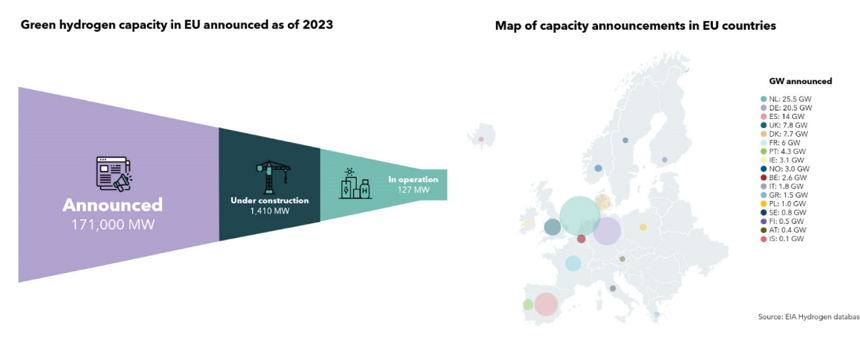
Europeans should be more interested in local hydrogen production than Americans and thus have a higher willingness to pay, e.g., via tax, mainly because the EU is an ‘Energy-hungry’ Union devoid of significant local hydrocarbons to cover our consumption. In 2021, the EU imported 80% of its total gas need, with domestic production halved over the last ten years, in sharp contrast to the US, which is a net exporter that increased domestic production by 51% in the same 10-year period. Furthermore, 99% of the imports the US did receive arrived through pipelines from Canada, which is arguably a more reliable trading partner than the EU’s historically biggest natural gas provider.

In the EU, it is becoming clear to governments and companies that national security is linked to energy security. The demand from existing sectors like fertilizer, cement and steel production is larger than the green hydrogen production capacity the EU can realistically build and import before 2035. The key to a mass roll-out of green hydrogen production is thus not to invent new use cases for hydrogen, such as hydrogen cars, but unlocking the existing hydrogen demand by replacing grey with green molecules.
So, what challenges for project developers are holding back a massive roll-out of green hydrogen production? There are many challenges, such as how to transport the hydrogen at a reasonable cost from production areas to consumption hubs, long lead times on essential equipment (e.g., electrolyzers and transformers), and securing cheap electricity supply (e.g., building co-located renewable assets). However, the biggest challenge to reaching FID is signing a long-term offtake agreement with a partner willing to pay a significant premium compared to grey hydrogen.
We are still in a world where producing green hydrogen is three to four times more expensive than grey hydrogen made using natural gas. This limits the offtake feasibility for many low-margin sectors with little opportunity to pass on the cost to their customers. For example, nitrogen fertilizer production is an obvious off-taker of green hydrogen. However, we are unlikely to see many nitrogen producers signing off-take contracts with the current market setup. This is because fertilizer production is a low-margin industry, where natural gas represents 60-80% of the variable cost; thus, changing from grey to green hydrogen will significantly increase the price of fertilizers, which farmers have little opportunity to pass on to end customers. However, similar to organic food, signaling and labeling of products in supermarkets might allow farmers to pass on a green premium on foods produced using green fertilizer, thus unlocking a massive demand for green hydrogen. Another promising way forward is for politicians to decide on a minimum percentage of green hydrogen required for all EU fertilizer producers, starting very low and increasing steadily – a solution which might also be used in other industries, such as steel production.
As a rule of thumb, we will see that off-takers of green hydrogen will have one or several of the following characteristics: (1) high-profit margins, (2) ability to pass on the green premium to customers, and (3) pressure to replace grey by green hydrogen from politicians, shareholders, and end consumers.
The difficulty of signing long-term offtake agreements between producers and consumers of green hydrogen is essentially a chicken-and-egg problem, where the off-takers have little to gain from being first-movers. Mainly because costs are expected to decrease as the technology moves out the learning curve resulting in lower capex, opex, and improved plant efficiency. However, we need projects for manufacturers, sub-suppliers, and developers to improve the technologies and processes. This is where government intervention has a major responsibility: getting started with deployment, similar to wind energy in Denmark and solar PV in Germany, where governments implemented R&D and industrial policies and utilized Feed-in Tariff systems to subsidize and de-risk the economics of projects.
Thankfully European politicians realize that government intervention will be needed to reach market competitiveness at the speed required to reach any climate targets. The invasion of Ukraine and the IRA bill have created the urgency and support needed for political action, which we now see through various policies and institutions designed to support hydrogen recently announced, most notably:
Creating policies for scaling hydrogen can be seen as a balancing trade-off between being overly bureaucratic and too lax, between carefully designed incentives and speed of implementation. The EU’s complex bundle of policies and support aims to provide support and risk transfer through selective tender processes. The supporting institutions have different grant application processes, which take time but ensure projects live up to a certain standard and prioritize better projects. On the other side of the Atlantic, the IRA is less complex, and the 10-year production tax credit of 3 USD/kgH2 is accessible to all projects which live up to a list of requirements. In comparison, the political framework of the EU seems to be a cheaper road for the government to scale hydrogen, whereas the IRA is likely to get projects off the ground quicker.
Due to political intervention, European hydrogen projects are in a much better place now than two years ago. Unlocking project finance for hydrogen developers has the potential to act as a catalyst for the speed of deployment in the industry. However, attracting project finance is very challenging as the structures to de-risk project cash flows are still not widely available. Therefore, the first project finance transactions in the green hydrogen industry will require developers, off-takers, banks, and financial advisors to think creatively about each project’s financing and structuring.
Getting banks comfortable with a repeatable structure to finance green hydrogen production plants would speed up the FID on a significant amount of green hydrogen projects, thus unlocking the private capital and capabilities of many more developers. In contrast to today where most projects reaching FID are financed on balance sheets by incumbent oil and gas majors. However, unlocking project finance may require support and guarantees from Export Credit Agencies (ECAs) and multilateral such as EIB to share risk with commercial banks in the first green hydrogen projects, similar to what was done for the first wind and solar PV projects.
The particular risks that attract the attention of debt providers are the price-risk of the hydrogen, counterparty risk, green electricity availability risk, and operational risk. The structures capable of mitigating these risks include long-term renewable PPAs, bankable off-take agreements with credit-worthy counterparties, and performance guarantees for equipment. Furthermore, in projects that include both an electrolyser and a Renewable Energy Source (RES), a major headache is the interface risk during construction between electrolyser and RES, since either asset is useless without the other. Structures such as an Engineering, Procurement, and Construction (EPC) full-wrap or a wrap-around guarantee would specify a single point of responsibility, consequently mitigating the project’s interface risk. However, despite being a potential bonus for banks, full-wrap guarantees will likely not be a requirement, analogous to offshore wind construction where the EPC for the Balance of Plant and Turbines are still separate.
For EU developers to secure project finance, there is no room for red flags, and they will have to combine bankable EPC contracts with cheap access to green electricity projects and government subsidies. Critical tasks are transparent negotiations and partnerships with off-takers while securing subsidies from institutions such as the European Hydrogen Bank, Next Generation EU recovery fund, and H2 Global. Despite these support mechanisms being limited to ten years, they do provide a level of certainty for curious banks looking to gain a foothold and experience in this growing industry.
It is evident that there are critical challenges for developers, the main one being signing long-term off-take agreements, particularly due to the cost gap between grey and green hydrogen. However, that gap will decrease as the technology develops and has already been narrowed by political intervention driven by a strong will to reduce Europe’s energy dependence. The EU’s political intervention using grants and CfD tenders provides support, and risk transfer seems a cost-efficient way to support deployment. Looking ahead, the successful developers will be those that manage to secure solid off-take agreements and grants, allowing them to structure projects convincingly enough for institutions to provide loans and resulting in strong economics that enable decision-makers to take Final Investment Decisions.
The IRA – how this three-letter act is significantly advancing decarbonization and disrupting global hydrogen market competitiveness The Inflation Reduction act marks the…
The IRA – how this three-letter act is significantly advancing decarbonization and disrupting global hydrogen market competitiveness
The Inflation Reduction act marks the most significant legislation in slowing climate change in US history. With hundreds of billions of dollars committed to the clean energy economy through tax credits, grants, and loan guarantees, the US market for renewable energy is set to explode. In this article, we discuss the significance of this bill and how this funding dramatically alters the domestic and global landscapes for the renewable energy and hydrogen.
When President Joe Biden signed the Inflation Reduction Act (IRA) into law on 16 August 2022, he enacted the largest investment in climate and energy in the US to date and thereby changed the market for renewable energy for a decade with a single stroke of a pen. Well… to say a single stroke of a pen is quite an oversimplification as the IRA took countless hours of negotiation and a total revamp of the once named Build Back Better Plan that Biden campaigned on, all to get to a 274-page bill that will have massive implication for the nation and the world.
And today, almost a year since the IRA was signed, the momentum around this bill is still very high. Investment in the renewable energy world is booming and we are seeing new players trying to enter the US market, while many existing US energy companies are diversifying into new technologies, particularly low carbon hydrogen and storage.
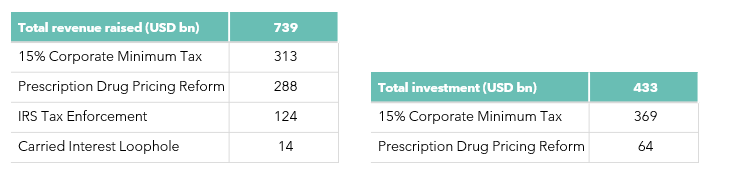
In total, the bill will lead to spending amounting to just about half a trillion dollars over the next decade (for a breakdown, please see note 1). It is no small chunk of change, but at approximately USD 43 bn per year, this would represent about just 0.7% of US Government spending when compared to the 2022 fiscal year. Most of that money will be spent on Energy Security and Climate Change programs, with approximately USD 369 bn dedicated to these programs over the next ten years. The remainder is dedicated to extending the expanded Affordable Care Act program for three years. In terms of where that money is coming from, the funds will be raised through several ways, most notably by enacting a 15% Corporate Minimum Tax. Revenue sources are estimated to generate USD 739 bn, meaning the bill expects to eat into the US budget deficit (see appendix for additional details).
We plan to spend the rest of this article discussing the significance of this bill and by extension, the funding, for the renewable energy and hydrogen markets. The biggest pool of money set aside in the bill is for the expansion and extension of the Production Tax Credit (PTC) and Investment Tax Credit (ITC) for wind and solar, a newly implemented ITC available for standalone battery storage, and new credit support for hydrogen, nuclear, and carbon capture through 2032 (for additional information on how these credits work, please see note 2). The wind and solar credits are significant support initiatives but are not overly groundbreaking and rather represent a continuation of a program that already existed. And while the money is crucially important, the new structure of how these credits can be monetized is perhaps more important. The bill now introduces transferability, a welcomed addition for those who are familiar with the complex US tax equity structure.
Tax equity financing is a complicated financing structure, with high transaction costs, which requires banks or other sophisticated investors with high tax liabilities to make an equity investment in a project so they can be assigned the rights to claim the tax benefits generated from ITC/PTC and depreciation. This is beneficial to the project since projects are usually inefficient taxpayers and must carry credits forward, reducing their benefit. By using tax equity, the project is able to monetize the credits upfront, but must implement this structure with complicated legal, tax, and accounting implications. Transferability, on the other hand, will now allow the project to sell credits directly on an open market to any business, without them needing to take an equity investment in the project. This will open the door for a wider range of corporates to participate in the market for credits, as any organization with tax liability will be able to directly purchase these credits to offset their tax liability. And while the market is still looking to Treasury for guidance about various issues, this new method for monetizing tax credits should yield the positive impacts of process simplification, lower transaction costs, and a deeper market for selling credits.
In addition to transferability, the IRA offers direct pay for select technologies, such as green hydrogen and carbon sequestration, as well as tax-exempt entities like state and local governments and Tribal/Native governments. Direct pay is a payment received from the Internal Revenue Service (IRS) through a cash refund for any amount in excess of a project’s yearly tax liability. This guarantees that developers can fully monetize the value of their tax credits. Put simply, come tax time, the IRS will write a check for the value of the tax credits for those who qualify for direct pay.
With these impacts, the IRA provides another catalyst to an already rapidly growing renewable sector and will accelerate trajectory toward the US goals of a decarbonized power sector by 2035 and net zero emissions overall by 2050. Through 2030, the IRA is estimated to lead to new, utility-scale clean power capacity installations growing at a 13% CAGR and resulting in between 525 to 550 GW coming online, according to American Clean Power. In comparison, without the passing of the IRA, industry forecasts projected utility-scale clean power capacity additions of 335 GW. The improved economics of projects resulting from the IRA will make additional projects viable that otherwise may not have been without these effects. A major boost for solar and wind projects, the additional financial benefits from IRA tax credits will open new areas of the country to projects, especially those with land costs higher and capacity factors lower than typical projects that may not have otherwise been feasible. But these benefits do not come without at least some challenges. The increasing number of renewable energy projects buoyed by the favorable federal policy will also worsen (the already very high) congestion and curtailment costs that energy companies are facing in all the American ISOs (Independent System Operators). Consequently, substantial new transmission capacity will have to be developed quickly to accommodate the increasing wind and solar pipeline. In addition, the recent rising interest rates and instability in the banking sector are causing new issues for the financing of the projects. And ultimately, developers are facing complexities resulting from the IRS not yet having provided guidance on some aspects of the law.
What really saw the greatest impact in the IRA was the support scheme for a budding standalone storage industry and green hydrogen market. Before the enactment of the IRA, the ITC did not apply to standalone storage projects. This means that when an energy storage project was grid connected and charged more than 20% power from the grid, the project could not claim an ITC. The additions made in the IRA now enable standalone energy storage projects of > 5kWh to receive a 30% ITC when prevailing wage and apprenticeship requirements are met – a requirement for >1MW projects or the ITC drops to 6% otherwise (see note 3). The ITC will be available in full until 2033. This new provision now allows energy storage projects to decouple battery storage from generation (i.e. a project can claim PTC for a wind resource, and ITC for the storage part independently). Nonetheless there is still some clarity needed and we expect more regulatory guidance soon regarding who is entitled to receive which tax credits in an integrated storage system. These key measures are boosting the standalone energy storage industry, which is critically important as we seek to balance the intermittent generation of renewables. With that said, we at Green Giraffe have witnessed an increased interest and new entrants in the storage market over the past few months.
To boost the clean hydrogen market, the IRA offers a new ten-year incentive for clean hydrogen projects that begin construction prior to 2033 with up to 3 USD/kg production tax credit (PTC) or a 30% investment tax credit (ITC) assuming prevailing wages and apprenticeship requirements are met. The credit amounts are highly dependent on the carbon intensity of the energy sources and technologies used and credits will be granted when lifecycle GHG emissions are lower than 4 kg CO2/kgH2. Now thanks to these credits, US green hydrogen is globally much more cost competitive than that of the EU. A recent study from Deloitte estimates that the cost of shipping green hydrogen, in the form of ammonia, from the US to Europe and then cracking that ammonia back into hydrogen would be about 1.5-2.5 USD/kgH2 (taking into account the 3 USD/kg H2 tax credit), compared to EU’s estimate at 3-4 USD/kg H2 in 2030.
And the market price imbalances do not stop there. On top of incentivizing green project developers to purchase US-made equipment (see note 3), the IRA offers new Advanced Manufacturing Production Credits (AMPC) until 2032 for domestic manufacturing of components such as blades, inverters, battery cells, photovoltaic wafers, solar modules and critical minerals processing. Overall, the IRA creates a disparity between US and international suppliers which will grow the US local supply chain and surely spur the development of new equipment supply chains.
However, there is a major mismatch between the high number of potential suppliers and the low number of offtakers, hence US projects are struggling to secure long term contracts, which delays projects’ final investment decisions. The DOE filed a notice of intent early June 2023, which includes a consultation running up to 24 July 2023, to provide USD 1bn of demand-side subsidies – the subsidy mechanism is being discussed. This support will be linked to the H2Hubs initiative, which aims to spend up to USD 7bn on six to ten regional hubs.
The IRA represents a monumental change and lift to the US renewables market (significant tax subsidies and incentives to buy US-made products), but the impact goes beyond. The effect is not only limited to what the bill actually does, but also what it forces the rest of the world to do, to keep up, which will ultimately have a greater impact for international markets and the entire planet’s decarbonization.
The EU and the rest of the world cannot and will not sit back and accept this new market imbalance, and as such the passing of the IRA has significant implications, especially in providing momentum towards an adoption of EU support schemes. In fact, EU regulators perceive the IRA as a violation of the World Trade Organization rules, with other countries such as Norway, Australia, Japan and South Korea raising similar concerns. Amongst others, there is a fear that European developers will be incentivized to move to the US, and that EU equipment exports to the US will be hampered. But since chances of amending the IRA are very low, countries will have to align on the support levels of the IRA to remain competitive.
The EU Commission President Ursula von der Leyen spoke at the last World Economic Forum in Davos early March and described the “Net-Zero Industry Act” strategy to respond to Biden’s IRA, stating “to keep European industry attractive, there is a need to be competitive with offers and incentives that are currently available outside the European Union.”
The “Net-Zero Industry Act” aims at simplifying access to subsidies, adapting state aid rules, building an EU workforce to support the green transformation, and swiftly responding to unfair international trade practices. To maintain and promote a European-based supply chain and develop new storage and hydrogen projects in Europe, the EU urgently needs US-style incentives, and easier permitting.
Outside of the EU, we also see other countries trying to progress on the support front. Last year the Canadian government vowed to respond to the US legislation with their own policy and recently unveiled a CAD 80 bn program for investment in the energy transition and low carbon economy. Australia is similarly taking steps. The Australian government also announced last May that they will invest USD 1.4 bn to scale up green hydrogen development. The funds will be allocated under a “Hydrogen Headstart” program that provides revenue support for large-scale green hydrogen projects through competitive hydrogen production contracts.
To conclude, the IRA is truly a global scale game changer. Governments around the world must react fast to implement proportionate policy and funding responses to the IRA, especially newly developing markets like clean hydrogen, for the risk of falling far behind is just too large. We will be watching closely to see how this legislation develops and are excited to help our clients who are entering, as well as those who are already established, to successfully participate in this booming US market. The path to decarbonization is still long but we are proud to see that the world is taking important steps forward.
Appendix
The new proposal for the FY2022 Budget Reconciliation bill will invest approximately USD 300 bn in Deficit Reduction and USD 369 bn in Energy Security and Climate Change programs over the next ten years.
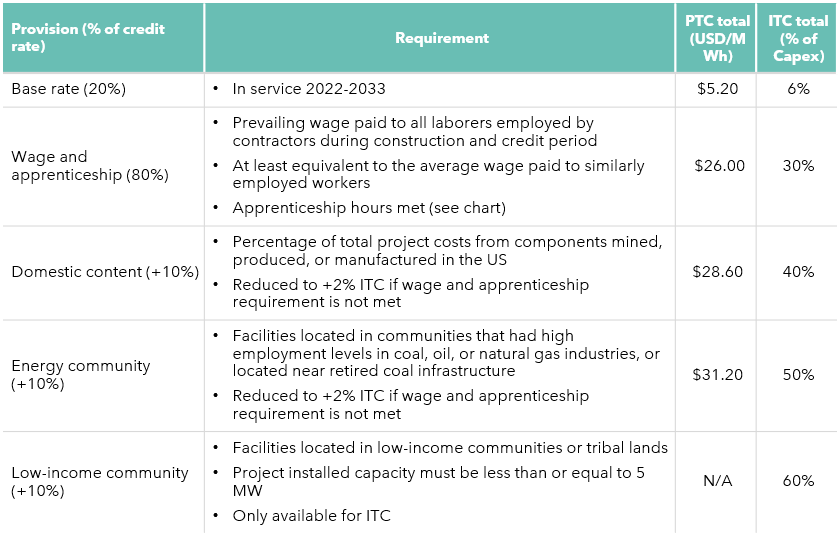
The Production Tax Credit (PTC) and Investment Tax Credit (ITC) credits function as dollar-for-dollar reductions in the income taxes required to be paid to the federal government rather than reductions to taxable income. The PTC is a variable payment awarded per MWh of electricity generation for a project’s first 10 operating years, while the ITC is one-time payment equal to percentage of total capex. The amounts of the credits earned varies depending on whether the project is able to meet a series of standards, shown in the table below. If you meet all ITC provisions, a project can receive up to 60% of the project CAPEX cost back in tax credits. Or USD 31.20 per MWh of generation if electing PTC. All in all, these credits represent quite a significant portion of the project cost.

Since opening its office in Cape Town in 2017, Green Giraffe has been involved in three renewables government tenders in South Africa, with the…
Since opening its office in Cape Town in 2017, Green Giraffe has been involved in three renewables government tenders in South Africa, with the most recent milestone being the financial close of the REIPPP Bid Window Round 5 projects of Coleskop WEF, Phezukomoya WEF and San Kraal WEF – the first three projects from Bid Window 5 to reach financial close. The South Africa market is now looking beyond government tenders towards utility-scale projects in the C&I space. What the REIPPP program has provided is a blueprint for financing utility-scale projects in South Africa for various offtake structures, and lenders & investors are allocating large amounts of capital to fund them – bringing much needed energy online.
The Renewable Energy Independent Power Producer Procurement Programme (REIPPPP) is an initiative created by the South African government aimed at increasing private sector electricity generation and investment with the use of renewable energy technologies, which over the past years has consisted of solar PV, concentrated solar, onshore wind, hydro-electric, landfill gas, biomass, and biogas. It was first announced at COP 17 and there have been six auction windows to date, with the projects from the first four windows being fully operational and bringing online 6.3 GW of power. The projects from Bid Window 4 achieved preferred bidder status in 2015 and it was six long years later that Bid Window 5’s auction date was announced. Growing up in South Africa and experiencing rolling black outs (or loadshedding as it’s colloquially referred to) since 2008, I would have suspected that any opportunity to bring online new generation capacity would be prioritised and streamlined but instead we have seen severe bottlenecks from the South African government, the energy regulator and the country’s state-owned electricity utility. When Green Giraffe first opened its office in Cape Town in 2017, we didn’t expect to wait as long as we did before the next government auction but since then, we have been involved in three tender processes, namely REIPPPP Bid Windows 5 and 6 as well as the Risk Mitigation Independent Power Producer Procurement Programme (RMIPPPP). We have seen the projects from Bid Window 5 reach financial close with the RMIPPPP tentatively expected to follow suit in Q2/Q3 2023. We believe that utility scale renewable energy projects are the fastest and cheapest way to bring online generation capacity in South Africa, and we believe that Bid Window 5 is the case study that will hopefully pave the way and lead to an acceleration in future projects coming online.
In October 2021, EDF Renewables (EDF R), together with their partners H1 Holdings and Gibb-Crede (the ‘EDF R consortium’), were awarded preferred bidder status on three projects (the ‘Koruson 1 Cluster’) as part of the REIPPPP Bid Window 5. Financial close for the first two projects, San Kraal Wind Energy Facilities (SK) and Phezukoymoya Wind Energy Facilities (PHE), was reached in November 2022 and, in January 2023, financial close was reached on the third project, Coleskop Wind Energy Facilities (COL). Each project consists of an onshore wind farm of 140 MW, located on the border between the Northern and Eastern Cape Provinces, in the municipality of Umsobomvu. In total, out of the 25 projects that were awarded preferred bidder status, only six have reached financial close, making it all the more impressive that the EDF R consortium were the first to reach financial close on three of those projects.
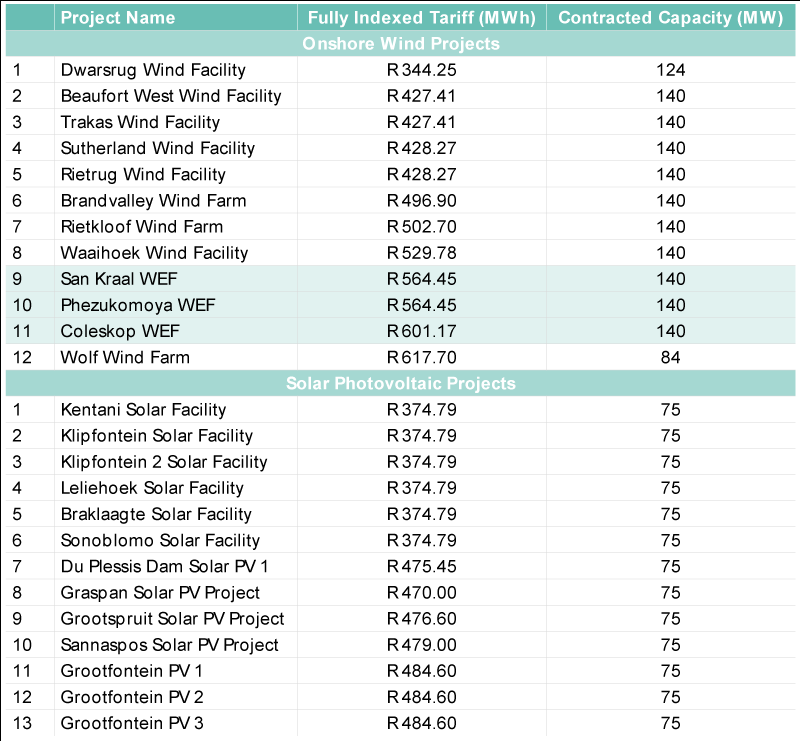
The initial target financial close date for all Bid Window 5 projects was scheduled for April 2022, a mere six months after preferred bidder status was awarded; however, with unclear delays from the South Africa government, together with the state-owned electricity utility’s slow decision-making, resulted in the financial close date slipping from April, first to July, then September, with the EDF R consortium finally closing in November 2022. EDF R’s commitment to investing in renewables in South Africa over the past decade, coupled with their long-standing relationships with local stakeholders and suppliers, ensured that they were able to mitigate the supply chain delays and reach financial close (despite the delays), thereby achieving an important milestone in de-risking projects and securing the necessary capital to proceed with construction.
The Koruson 1 cluster has a combined capacity of 420 MW and will eventually meet the electricity needs of approximately 570,000 households once operational. Each site will comprise of 26 wind turbine generators, each standing over 120 m tall with a blade length of around 80 m. The total capital cost for the three projects is in the region of ZAR 11 billion and they are expected to be commissioned in late 2024. The three plants will connect to the Koruson Main Transmission Substation, which is being constructed by the EDF R consortium. The asset will be transferred South Africa’s electricity parastatal upon completion. The construction of these wind farms will lead to more than 300 full-time jobs for the construction period with the operations leading to more than 30 full time jobs for the entire duration of the 20-year operating period. 40% of the project value will be spent locally in South Africa, with 1.2% of revenue generated going to socio-economic development initiatives for nearby communities. A trust has also been formed for the local community under the terms of which they will own a 2.5% stake in all three projects and receive pro rata distributions from each SPV. The power generated by the Koruson 1 cluster will be supplied to the national grid under a 20-year Power Purchase Agreement (PPA). Financing came from a bank club comprising of three commercial lenders and a debt fund, namely Standard Bank, Absa Bank, Investec and Momentum Metropolitan. The lenders provided two senior debt facilities, in the form of CPI-linked debt and JIBAR-linked debt, a subordinated quasi-equity facility, a Debt Service Reserve Facility (DSRF) and a VAT facility.
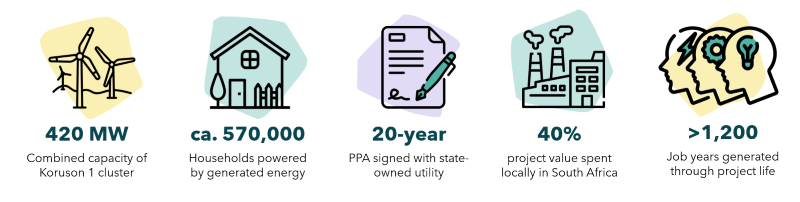
Green Giraffe acted as sole financial advisor to EDF R, supporting on all financing aspects, testing the market and engaging in conversations with various commercial lenders and debt funds active in the South African infrastructure sector and in renewable energy in particular. Our experience from these discussions is that there is a large allocation of debt dedicated purely to renewables projects, with commercial lenders even deciding to split out resources from their greater infrastructure teams to focus purely on opportunities in the energy sector. In addition to the debt allocation and focus, we see lenders becoming more sophisticated with their offerings and providing more competitive terms which begs the question, why are there not more transactions being financed and why can’t this happen even faster?
It would appear that the private sector has seen what the government has missed: renewable energy is a fast way to bring energy online, and the rise in utility-scale commercial and industrial (C&I) renewables projects will no doubt be a critical component of the energy mix in South Africa in the future. Bottlenecks, delay, and energy management/generation issues in part stemmed from a centralised generation model in South Africa, where the country’s energy parastatal was sole provider to residential, C&I and even local municipalities electrical energy needs. Moving forward, we will most likely see further liberalisation on electricity generation through C&I consumers as well as local municipalities securing offtake from private sector generators. The City of Cape Town municipality has announced its request for proposals to procure electricty with other municipalities expected to follow suit. Utility scale projects are no longer only bankable via national government tenders such REIPPPP or RMIPPP, but they can now secure revenues by generating energy for private and local government (municipal) off-takers – something that was not possible in South Africa until fairly recently. Local industries can now protect themselves from the rapidly increasing costs whilst also pro-actively reducing their carbon footprint by purchasing energy directly from IPPs. They can make this switch quickly due to the relatively short construction period for new renewables plants. If we look at renewable energy plants: utility scale solar PV power plants can be constructed within 12-18 months while onshore wind projects take 18-24 months. In comparison, the construction period for coal powered plants can take upwards of 60 months and nuclear tops the list, taking up to 96 months (8 years) to construct. In addition, the indexed tariff secured for onshore wind projects awarded preferred bidder status were between ZAR 344.25 and ZAR 617.70 per MWh and for solar PV projects it was between ZAR 374.79 and ZAR 484.60 per MWh, which demonstrates the potential for extremely low Levelized Costs of Energy (LCOE) from renewables generation when compared to traditional fossil fuel generation. As a result, we are seeing the first set of projects with corporate Power Purchase Agreements (cPPAs) being constructed in South Africa, which will help to bring more renewables generation online in parallel to the REIPPPP. There are many of lessons to be learnt from these latest Bid Window 5 closings that can be implemented in the South African C&I projects rapidly being developed, financed and constructed. Many of South Africa’s commercial lenders have taken the view that large scale C&I deals have a similar characteristic to those financed in the REIPPPP: broadly speaking, they are all utility-scale and they have long-term energy offtake contracts. There are indeed some significant differences in cPPAs compared to REIPPPP PPAs, which lenders will have to pay close attention to when determining their risk, but the barriers to credit approval and appetite for lending are already very favourable, especially considering how new this route to market is in South Africa.
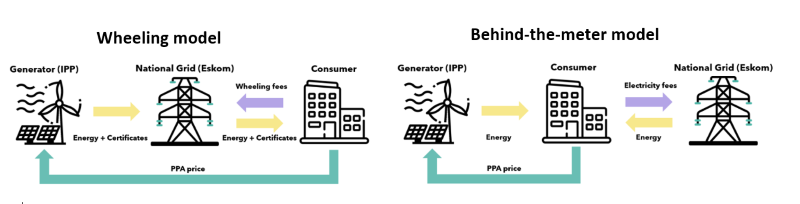
So, what does this mean for the energy sector in South Africa? We know that there are severe and growing issues with grid connection capacity in South Africa, as highlighted by the bid window 6 results, which slows down the speed at which new projects can come online; however, every additional (utility-scale) project that comes online theoretically alleviates the generation burden on the state-owned electricity utility and in turn allows them to focus on the planned unbundling into three separate entities each focused on transmission, distribution and generation. In the short term, we can therefore expect a reduced burden of energy consumption on South Africa energy parastatal – or increased generation capacity, depending on how you look at it – as well as the fast evolution of financing terms for projects with cPPAs. In the long term, we would expect this to lead to a liberalised electricity market in which prices are driven down by private sector competition. The development of a steady stream of projects could lead to more OEMs setting up manufacturing locally, further driving down capex figures while creating local employment opportunities. We have also seen the South African government making changes in the proposed amendments to the electricity act to create an environment in which more generation can come online faster and with less red tape. This may seem like an optimistic view on the future of energy security in South Africa and no one will deny that the steps that the South Africa government take in the coming years will be crucial to the country’s economic health, but the fact remains: there is a blueprint for financing utility-scale projects in South Africa for various off-take structures and lenders and investors are allocating large amounts of capital to fund these projects, bringing much needed energy online. And it is just the icing on the top that these are carbon neutral generation technologies.
Green Giraffe supported EDF R and its partners in the REIPPPP Bid Window 5 tender phase and subsequent capital structuring and debt raise for three projects, SK, PHE and COL
Green hydrogen and e-fuels are key markets for the energy transition, and over the last few years the Green Giraffe team has developed a…
Green hydrogen and e-fuels are key markets for the energy transition, and over the last few years the Green Giraffe team has developed a growing track record of raising finance for green hydrogen and green ammonia projects around the world.
Earlier this month, Barbara Zuiderwijk shared Green Giraffe’s insights regarding the hydrogen and green ammonia value chain at the 20th Benelux Infrastructure Forum in Amsterdam. The presentation breaks down the value chain for both green hydrogen and green ammonia, and explores the regulatory context.
The presentation is available for download.
Randy Male discussed how lessons learned in Europe on financing transmission can help the growing US offshore wind industry. The US offshore wind…

The US offshore wind market is poised to finally take off.
Financing offshore wind transmission systems as the initial projects move to construction is a major decision – and cost driver. Lessons learned in Europe may help developers and policy leaders in the US organize for the most cost efficient outcomes.
On 24 September Green Giraffe’s Randy Male, director of our Boston office, presented on this topic at the 4th Offshore Wind Transmission, US conference. His presentation is available online.
With the emergency of zero-bids and falling electricity prices, how do European auction designs affect the economics of offshore wind projects? How do governments…
In the context of zero-bids and falling energy prices, Udo Schneider shared his insight at WFO’s Offshore Wind Economic Forum on the impact of European auction designs on the economics of offshore wind farms and considerations for governments to create a fair marketplace that ensures the best value for society.
Clément Weber gives his views on why non-recourse debt has never been raised for floating offshore wind to date and how to release it.…
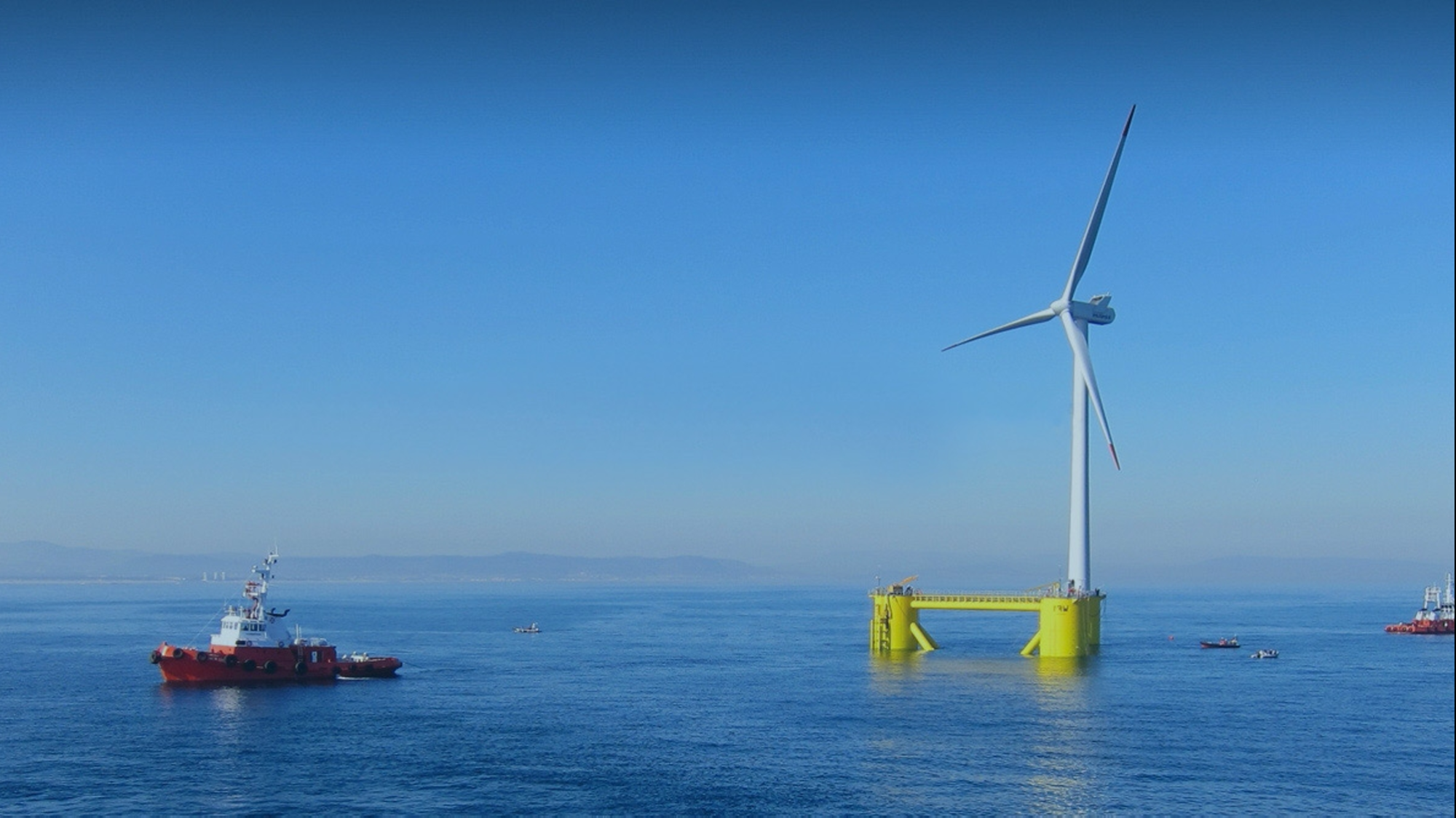
Recent development of floating offshore wind and promising market prospect: will finance be the bottleneck?
In 1991, the first offshore wind turbines were built in front of the Vindeby town in Denmark. It took 10 years to build a first commercial size project and 5 more years before private banks were able to take construction risk on a non-recourse basis, financing the Q7 project in the Netherlands. This first “project finance” milestone in an industry which is now mobilising a billion euros a month from senior lenders was only made possible by a combination of factors: in-depth due diligence of the technology, protective contractual structure, strong insurance coverage and contingency planning, tailor-made financial structure and a specific focus on interface risks. The floating offshore wind sector follows a similar route, with the first prototypes installed 10 years ago, pilot wind farms now under construction, commercial wind farms under development and an extraordinary potential of multi-GW yearly installation post-2030.
Firstly, are we sure that the pioneering expansion of floating offshore wind is all that new? Floating platforms have been used in the oil and gas sector for decades and applying them to a mature offshore wind sector could be seen as part of the natural incremental innovation of the industry. After all, lenders have closed billion-euro scale financings for offshore wind projects using (for most of them) a combination of brand new turbine models with only a few prototypes in the water, massive vessels just out of the docks, XXL monopiles 20% larger than the immediate previous generation and/or new installation methods.
How to make a floating offshore wind project bankable?
Although it is undeniable that its proximity to the fixed offshore wind sector will ease the learning curve, the answer is that the finance community currently considers floating technology as more than a simple evolution within an established sector. Structuring a project to raise non-recourse debt for the first floating offshore wind projects therefore needs to be done in a way that makes banks comfortable to unlock a whole new sector in the face of “unknown unknowns.”
What it means is that in addition to the usual bank requirements for offshore wind, developers must ensure that the following structuring features are carefully considered:
1. General – keep it simple: raising project finance for the first floating projects is a major ask and projects need to balance the novelty with an otherwise robust proposal: strong sponsors, experienced supply chain, low country sovereign risk, skilled project team and proven technology for the turbine, and limited or no revenue risk.
2. Technical – pick a proven technology: the lenders will favour the most proven technologies with prototypes already in the water, developed by solid counterparties. Despite IP concerns, a particular focus will be put on the transparency provided to the lenders’ technical advisor towards the review of the technology. Developers and technology providers should be ready to provide data from the existing prototypes. This will apply to all aspects of technology novelty (mooring, dynamic cables, potentially vessels) and not just to the floating foundation.
3. Contractual – target a healthy structure without loopholes: contracts will have to be particularly protective.
– A limited number of construction contracts (2 to 6) are preferred.
– Full-scope, fixed-price and long-term O&M contracts must be in place from financial close.
– Terms and levels of liquidated damages and guarantees need to be high.
– The interface risk will be scrutinised, with a focus on any gap remaining between the foundation and turbine contracts.
– The commitment of the floating manufacturer to ensure valid production conditions for the turbine (inclination, etc) will be specifically scrutinised.
4. Financial – find the optimum: the overall finance structure should not be too aggressive. Ample contingency budgets will be required to cater for cost overruns, or heavier than expected maintenance, as well as standard reserve accounts and debt sizing ratios on the conservative side.
5. Insurance – don’t forget the other risk takers: despite a risk analysis similar to what is done by the lenders, the insurance market is largely independent, yet essential. A few very specialised insurance advisors that have played a major role to make offshore wind insurable can now educate insurance parties to floating and projects should involve them without delay.
Current appetite in the debt and equity market?
On the lenders side, the EIB, a couple of ECAs and a handful of commercial banks have already received narrow credit committee approvals to lend to the right floating asset. Some projects will not reach the “bankability” trigger. Other projects with a structure in line with the recommendations above will attract these lenders and others. Those will be financed under terms that will remain fairly attractive: long term tenor, 60-70% debt-to-equity ratio, circa 2% margin.
The future of floating is bright, and one may fear that the imbalance between this limited funding currently available for the very best projects and the tens of GW to be financed would lead to a bottleneck. On the contrary, we believe that the initial pool of lenders will expand in parallel with the development of the sector, as the feedback from the first transactions will filter unfounded worries from the real challenges.
As politics and business come together to boost offshore wind in the Baltic sea, PFI asked Udo Schneider to author a piece in Yearbook…

Is Polish offshore wind about to be unlocked? Green Giraffe has been following the market for a long time and has been active over the years, we assisted in the recent sale of a portfolio of four offshore wind projects with a total generation capacity of more than 1.5 GW to RWE Renewables including the F.E.W. Baltic II project.
As a partner to Baltic Trade and Invest, Green Giraffe was responsible for the commercial structuring of the projects since 2017 as well as defined and executed the divestment strategy as exclusive financial advisors to the owners. A process that didn’t go without hurdles as key value drivers such as permitting status, access to grid connection and offtake routes have been and remain moving targets for most projects.
As politics and business come together to boost offshore wind in the Baltic sea, PFI asked Udo Schneider to author a piece in Yearbook 2020 on his view of the policies that are due to shape this flourishing industry.
Energy from waste (EFW) projects are both very simple to develop and very easy to get wrong. Michael Ware has been advising on financing…
Yann Mouterde presented at the Geman and French onshore wind financing conference held by OFATE in Paris on 12 November. The presentation focused on the…
William Jackson presented at the 7th Asia Offshore Wind Day on 15 October in Taipei, discussing the key financial factors that will affect the…
William Jackson presented at the 7th Asia Offshore Wind Day on 15 October in Taipei, Taiwan.
The presentation looked back at how things stood from a financing perspective before the first Taiwanese offshore wind tender, looked at what has changed since the first tender and finally looked ahead to the next tender and discussed the factors that might affect it.
On 6 June 2019, Green Giraffe, in cooperation with RCG and WFW, organised a seminar on the current state of play of the floating…
Moderated by our very own Clément Weber, a panel composed of Igor Silence (Codan), Guillaume Faure (Quadran Energies Marines), Benoîte Chenut (EDF Renouvelables) and Inocencio Figaredo (EIB) described the status and prospects of the sector, as well as the financing strategies and constraints. We are grateful to the members of the panel for the quality and intensity of the discussion.
Green Giraffe’s presentation “Financing floating offshore wind” is available to download here.
MEET THE TEAM

Managing Director – Head of Green Giraffe Advisory London
Clément is a founding partner of Green Giraffe Advisory. Based in London, where he established the firm’s office in 2011, he brings extensive expertise across the offshore and onshore wind sectors, advising on both equity and debt financing. Between 2017 and 2019, he led the Paris office before returning to London to support the firm’s continued growth.
He is a recognised thought leader in renewable energy and a frequent speaker at industry events, offering strategic perspectives on bankability, market dynamics, and commercial positioning for clients across the energy transition.
His transaction experience includes:
Before founding Green Giraffe Advisory, Clément worked in project finance at Dexia in Paris (2008 – 2010), preceded by a tenure with the Agence Française de Développement (AFD) in Beijing (2006-2007). He is a graduate of École des Ponts ParisTech and holds an MSc in Project Finance from Université Paris X.

Managing Director Utrecht
Barbara is a founder of Green Giraffe Advisory. She has a strong track record in the contracting and financing of onshore and (offshore) wind farms in Northern Europe
Barbara supported the development, contracting, and (re)financing of Northwind (216 MW, Belgium, 2012), Gemini (600 MW, the Netherlands, 2014), Veja Mate (402 MW, Germany, 2015), Norther (370 MW, Belgium, 2016 and 2020), Windpark Fryslân (383 MW, The Netherlands, 2019), Baltic II & Co (1.5 GW, Poland, 2019), Windpark Zeewolde (322 MW, The Netherlands, 2020) and Deutsche Bucht (252 MW, Germany, 2021). She has been supporting consortia participating in several European offshore wind tenders as well as having been involved in other technologies such as the ground-mounted solar farm Duurkenakker (64 MWp, The Netherlands, 2020)
She is currently involved in raising financing for a portfolio of projects that combine on-site renewable energy generation with electric vehicle charging infrastructure and battery storage
Before founding Green Giraffe, Barbara worked at the project developer Econcern, and as investment banking trainee at ABN AMRO
Barbara is recognised in the top 100 most influential female business leaders in the 2024 Women in Power list

Managing Director Paris
Pierre-Etienne is a founding partner of Green Giraffe Advisory and an industry veteran with extensive experience successfully guiding clients and closing complex transactions across diverse markets and technologies.
Over the past 15 years, he has built a track record of transactions globally, specialising in large-scale non-recourse and holdco debt financings, and M&A (buy-side, sell-side, and corporate fundraising) spanning a diverse portfolio of energy transition projects and platforms. His transaction experience is structured across three key areas:
Benchmark offshore wind M&A and debt: He has overseen numerous fundraising efforts for major European offshore wind projects, including non-recourse debt financing for developments exceeding 1 GW in capacity. Key mandates include advising on major asset sales for offshore wind projects, managing platform M&A, and executing debt restructuring mandates. Before founding Green Giraffe Advisory, Pierre-Etienne spent four years in Dexia’s project finance team, where he closed multiple transactions across public-private partnerships, transportation asset financing, and renewable energy sectors, including solar, offshore, and onshore wind farms.
Pierre-Etienne graduated from École Centrale de Lyon and holds an MSc in Finance from ESCP-EAP Business School in Paris.

Managing Director – Head of Green Giraffe Advisory Hamburg
Udo is a managing director of Green Giraffe Advisory and co-heads the Hamburg office
Since joining Green Giraffe in 2015, he has advised on multiple sell-side and buy-side equity transactions, as well as debt raises and provided commercial contracting advice for complex energy transition projects at different development stages and in different countries. He is also providing advice on tenders and renewable energy offtake solutions
Amongst others, he has led the debt raise for the 1.2 GW Baltic Power offshore wind project in Poland (ongoing) and debt finance for an innovative geothermal project, supported developers in offshore wind tenders and headed the M&A transactions for the offshore wind projects TWB II (200 MW, DE, 2017), Global Tech I (400 MW, DE, 2020), and Gode Wind I (347 MW, DE, 2018) as well as the development, structuring and sale of a Polish 350 MW offshore wind project to RWE. He also supervised the M&A transaction leading to the creation of Alterric (JV ENERCON & EWE) and is contributing to establishing a new green hydrogen economy
Before joining Green Giraffe, Udo worked in the infrastructure finance and renewables team of PwC for 14 years advising investors, developers and industry players on several onshore and offshore wind projects as well as infrastructure and public private partnership projects globally
Udo holds a bachelor of business in finance from the University of Technology, Sydney, and graduated from Hamburg University with a degree in economics

Managing Director – Head of Germany Hamburg
Kai is a Managing Director at Green Giraffe Advisory and heads the Hamburg office. He brings almost 20 years of experience in the energy transition and renewable energy finance.
Since joining Green Giraffe in 2019, Kai has led numerous landmark transactions in the offshore and onshore wind, solar PV, EV charging and battery storage sectors. Kai’s most recent achievement includes supervising the major corporate refinancing of EUR 435 M for EEW Group.
He has led several financings in the offshore wind space for Global Tech I, Baltic Power or Veja Mate, whilst also being active on the buy- and sell-side for offshore and onshore wind farms, solar PV platforms, EV charging, grid infrastructure, and BESS assets.
Prior to joining Green Giraffe Advisory, Kai spent 11 years at Deutsche Bank’s infrastructure and energy team (part of 18 years total at the bank), where he structured Europe’s largest solar PV project bond (€404M, Spain, 2016).
Kai has a Master’s degree in Business Administration from the University of Hamburg and studied at Aarhus Business School.

Managing Director Paris

Senior Director – Head of Japan Tokyo
Jun is in charge of leading and managing the Tokyo office. With over 20 years of experience in renewables and investment banking, he has contributed to the development and realisation of more than 50 utility-scale renewable energy projects totalling more than 1 GW of installed capacity in Japan

Senior Director – Head of Singapore Singapore
Will is a Director and Head of Singapore office. He has worked on transactions and tenders across four continents, with a particular focus on offshore wind. Prior to joining Green Giraffe Advisory, Will worked at the oil & gas team of Continental AG, a multinational engineering firm

Senior Director – Head of Africa Cape Town
Offshore wind | Onshore wind | Solar PV | Hybrid technologies
Frederico has focused on complex and cutting-edge transactions. He has led transactions in tender support as well as debt and equity raising globally with a recent focus on emerging markets particularly in South Africa and the broader African continent

Senior Director – Head of Australia Sydney
Onshore wind | Solar PV | BESS & grid | Offshore wind | Hydrogen & e-fuels
Debt advisory | M&A: sell-side and buy-side | Tender support
Marcus heads the Australian office. He has experience leading debt and equity transactions across Australia and the UK. Before joining Green Giraffe Advisory, he spent 6 years at IDCM, a debt boutique in London. Prior to that he was at EY

Senior Director – Head of UK and Ireland London
Yusuf Thanawala is a Country Manager UK & Ireland at Green Giraffe Advisory, responsible for leading and expanding the firm’s UK franchise. He brings more than 20 years of experience in investment banking and corporate finance, including over a decade focused on the energy transition, renewable energy and power infrastructure sectors.
Yusuf has advised developers, infrastructure investors, private equity sponsors and strategic corporates on a broad range of transactions across solar PV, battery storage, onshore and offshore wind, EV charging, smart metering, biogas, district energy and grid infrastructure.
His experience spans IPP platform sales, portfolio disposals, minority and majority stake investments, growth capital raises, acquisitions and strategic partnerships across the UK, Europe and the Middle East.
Prior to joining Green Giraffe Advisory, Yusuf was a Director at Akereos Capital, where he played a leading role in building the firm’s M&A advisory franchise and advising on numerous landmark energy transition transactions across Europe.
Previously, Yusuf spent almost a decade at HSBC in the Power, Utilities and Renewables investment banking team in London and Dubai. He also worked at Credit Suisse in the European Energy team, advising clients on M&A, IPOs, equity raisings and acquisition financings across Europe, the Middle East and emerging markets.
Yusuf holds an MBA in Finance and a Master of Commerce degree from the University of Mumbai.

Senior Director – Head of Southern Europe Madrid
Solar PV | Offshore wind | Onshore wind | Hydropower | Hybrid technologies | Heat
Raúl leads Green Giraffe Advisory’s commercial operations in Southern Europe. He brings over 15 years of experience advising clients on energy transition transactions, with a strong focus on debt structuring, M&A and financing. Before joining Green Giraffe, Raúl spent 3 years at Astris Finance, and previously held roles at BBVA and ACS.

Director Hamburg
Ann-Kathrin is a project finance professional with extensive expertise in originating, structuring, and executing deals across the energy sector. Over the past year alone, she has successfully closed seven renewable energy transactions.
Before joining Green Giraffe Advisory, she spent 14 years at KfW IPEX-Bank. Her background includes managing portfolios of multi-billion-euro energy assets, alongside handling complex restructuring assignments. She combines strong analytical rigour and intercultural competence to deliver sustainable, long-term financial solutions.

Senior Director Utrecht
Jakob Bergvelt is a Senior Director at Green Giraffe Advisory, with 14 years of expertise in renewable energy finance. He has been a driving force behind the execution of landmark offshore wind, onshore wind, and solar PV transactions across Europe.
Specialising in complex debt-raising and investment strategy, Jakob has guided clients through large-scale financial closings and competitive tender processes. His expertise spans the full project lifecycle, including advising consortia on bid structuring in the Netherlands, Germany, Belgium, and Poland.
Most recently, Jakob led the financing for the 1.14 GW Baltic Power offshore wind farm in Poland – one of the world’s largest – successfully reaching financial close for Northland Power and ORLEN. His extensive track record also includes milestone projects such as Gemini, HKZ 1&2, Norther, Zeewolde.

Senior Director Utrecht
Frank focusses on complex leading-edge projects. He advised the winning Oya hybrid project in a technology neutral tender. As market leader for hydrogen & e-fuels he has worked on several power-to-X projects including the development of the 1 GW Nujio’Qonik onshore wind to ammonia project located in Canada. Besides, he is advising on the optimal plant sizing by combining a technical and financial model

Senior Director London
Michael has been leading several deals, in particular in waste-to-energy, anaerobic digestion, solar and battery energy storage. Michael has a high profile in the renewable energy industry due to his work in the media and his role as part-time writer for the Spectator magazine
No experts match your filters.